
Twenty-five centuries and counting, Elea, Los Alamos, a hotel with no last room
Paradoxes
Where the order seems to break, and whether it does
A tortoise that can never reach a rock, a night sky that should be as bright as noon, a twin who comes home younger, a hotel with no vacancy and room for everyone. Each one is a place where the order seems to break, and the honest note under each says whether it does.
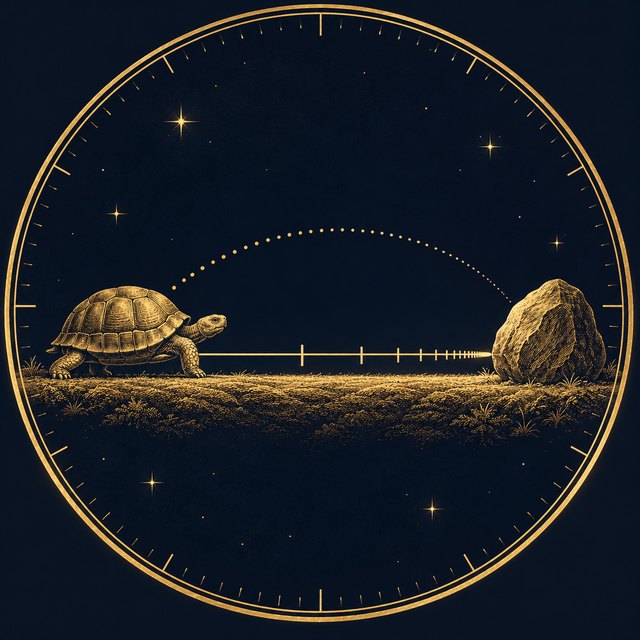
A tortoise sets out for a rock. Before it can get there it has to reach the halfway point. Then it has to cross half of what is left. Then half of that. There is always a half left, so there is always one more step, and infinitely many steps cannot be finished. So the tortoise never arrives, and neither does anything else, and motion is impossible. Zeno of Elea said this about twenty-five centuries ago and meant every word; he was defending his teacher, who held that change is an illusion. Aristotle wrote it down in order to argue with it, and people have been arguing with it since.
The halfway
Zeno had more than one knife. Give the tortoise a head start and Achilles, the fastest man alive, never passes it: by the time he reaches where it was, it has moved on, and by the time he reaches there, it has moved on again. And the arrow: at any single instant the arrow in flight is simply where it is, not moving. Time is made of instants. So the arrow never moves.
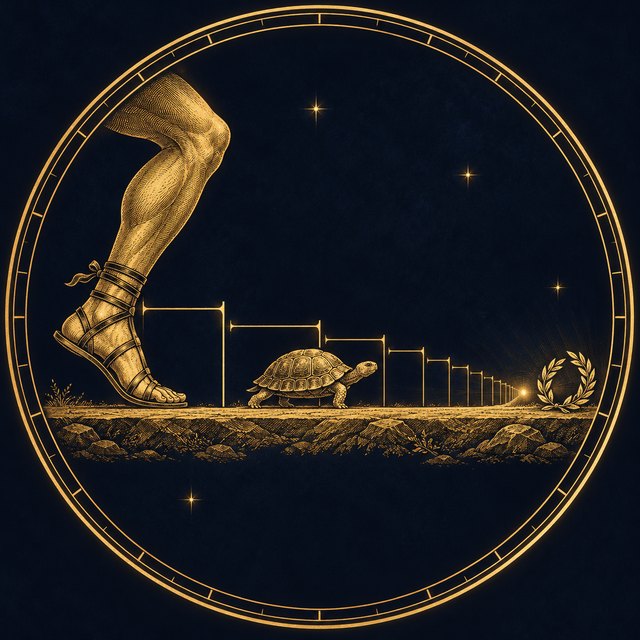
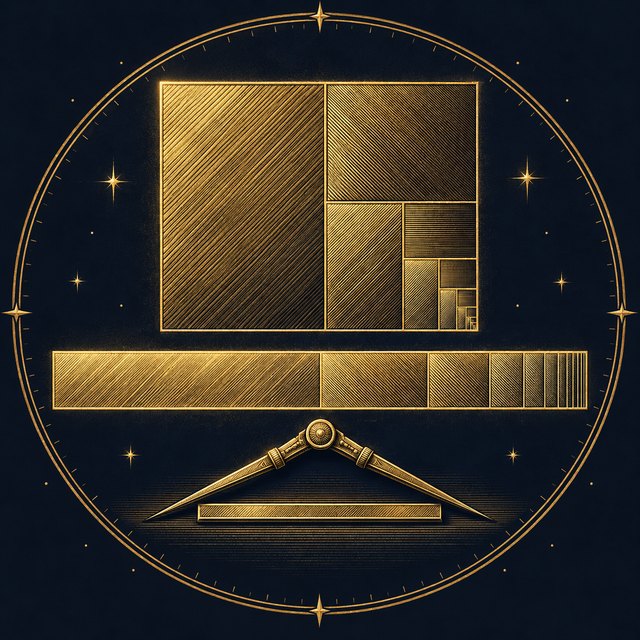
Here is the honest note, and it is the good part. Halve a distance forever and the halves add up to the whole: a half, a quarter, an eighth, and on without end, come to exactly one. Not nearly one. One. The trick hidden in the story is the clock. It assumes each half takes the same amount of time, and it does not. A tortoise walking at one pace takes half as long for each half as it took for the last, and those times add up the same way, to a number you can wait out. Infinitely many steps, finished in two seconds. Aristotle saw this and said the distance is only ever potentially infinite, divisible as far as you please but never actually divided. The calculus of Newton and Leibniz made the sum exact two thousand years later, and the arrow got its answer there too: speed at an instant is a limit, not a thing a photograph can show.
What is still open, and the page should say so, is whether space and time can really be halved forever. Physics has a scale, the Planck length, about a hundred-billion-billionth of the width of a proton, below which our theories stop working. That is not a proven smallest distance. It is the edge of what we know. Zeno's real question, whether the world is grain or continuum, has not been settled. Put the tortoise on the two clocks below and watch which one it reaches the rock on.
The shelf
The rock is the first entry. Here are the rest, each told as it bites, and under it the honest note: whether it was ever a real break in the order or only a trick of the words, and for a few of them, that nobody knows yet. Four of these are solved and the solution is the interesting part. Three are not solved at all.
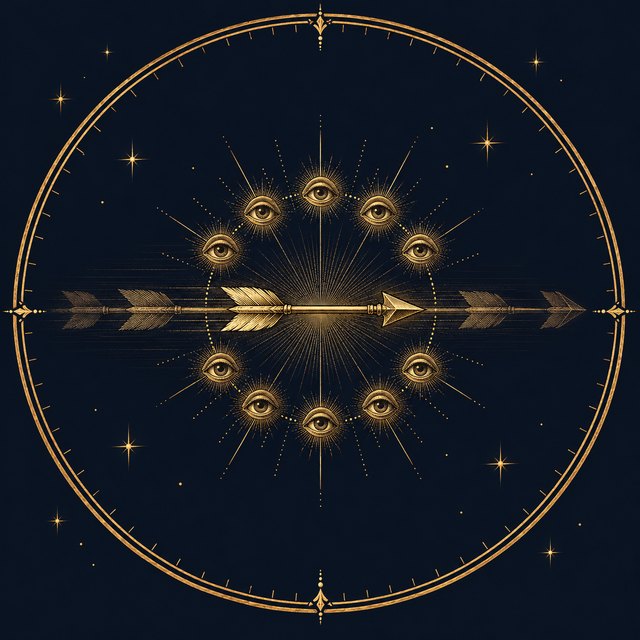
The arrow, watched
Zeno's third knife. At any single instant the arrow in flight fills exactly its own length and is not moving anywhere. Time is made of instants. So the arrow never moves. Calculus answered that one: speed at an instant is a limit, not something a photograph can show. But at the smallest scale Zeno turned out half right. An atom about to change state can be stopped from changing by looking at it often enough; every look resets it. In 1990 a team at the National Institute of Standards in Boulder held beryllium ions in a trap and showed it: the more often they measured, the fewer atoms changed, and with enough looks almost none did. They named the effect for Zeno.
A watched pot really does not boil, but only a quantum pot, and only because in quantum mechanics a look is not nothing. The arrow itself, at human size, flies whoever is watching.
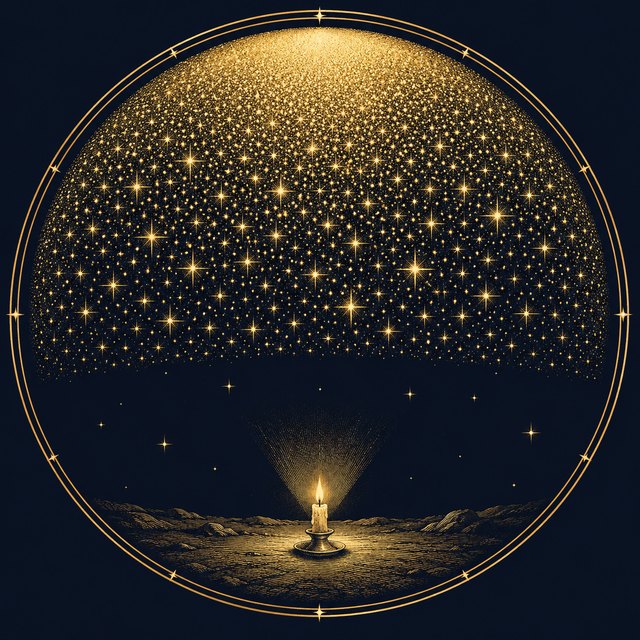
The dark sky at night
If the universe is infinite, eternal and full of stars, then every line of sight ends on the face of a star, and the whole sky should be as bright as the Sun, day and night. It is not. Kepler worried about it in 1610 and Heinrich Olbers put his name on it in 1823. Edgar Allan Poe, of all people, gave the right answer in a prose poem in 1848: the universe is not old enough for the light from the farthest stars to have reached us. The same infinite sky had a second problem, which Richard Bentley put to Newton in 1692: if every star pulls every other, why has the whole lot not fallen together in a heap? Einstein was still fighting that one in 1917 and added a term to his equations to hold the universe still. Then Hubble found it was not still at all.
Both solved, by the same fact: the universe had a beginning and is flying apart. The oldest light has been stretched out of sight into the microwave, where it is in fact everywhere. The darkness over your head is the plainest evidence there is that time started. And the term Einstein added came back from the dead in 1998 as dark energy, which is on the open questions shelf.

The twins
One twin stays home. The other flies off near the speed of light and comes back. Relativity says the traveller comes home younger. But motion is relative, so from the traveller's seat it was the home twin who flew away and came back, and the home twin should be the younger one. Both cannot be true. The answer is that the traveller turned round, and turning round is not relative; it is the one thing only one of them did, and it breaks the tie. In October 1971 Hafele and Keating flew four atomic clocks round the world on ordinary airliners, east and then west, and compared them with the clocks at the Naval Observatory. The clocks that flew east came back fifty-nine billionths of a second young. The ones that flew west came back older.
Solved, tested, and in your pocket: the satellites your phone uses to find you run their clocks slow on purpose, by exactly this arithmetic, or the map would drift by miles a day.

The faint young Sun
Stars brighten as they age. Four billion years ago the Sun gave about seventy percent of the light it gives now, and with that little light the Earth should have been frozen to the equator. The rocks say otherwise: oceans, sediments laid down under water, and life, from almost the start. Carl Sagan and George Mullen named the problem in 1972.
Not fully solved. The favoured answer is a far thicker blanket of carbon dioxide and methane in the early air, and a darker planet that kept more of the light, but the numbers are still argued over. This is the one entry on the shelf where the Earth itself is the paradox.
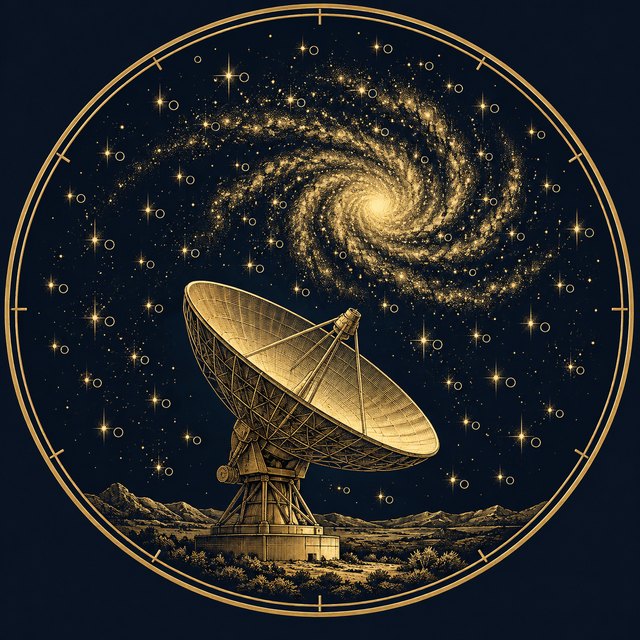
Where is everybody
Summer 1950, Los Alamos, over lunch, Enrico Fermi asked it. The galaxy is ten billion years old and holds hundreds of billions of stars. A civilisation with ordinary rockets could cross it in a few million years. So the galaxy should have been settled many times over, long before us, and the signs should be everywhere. They are nowhere.
Not solved. Every answer is a guess with a name on it: life is rare, minds are rare, civilisations die young, they are here and hidden, we are early. The honest reading of the silence is that at least one step between a star and a radio telescope is far harder than it looks, and nobody knows which step.
The hotel with no vacancy and room for everyone
David Hilbert's hotel has infinitely many rooms and every one is taken. A guest arrives. Move everyone up one room and room one is free. Infinitely many guests arrive. Move everyone to double their room number and every odd room is free. Infinity plus one is infinity, and so is infinity times two. Galileo saw the same thing in 1638: there are exactly as many square numbers as there are whole numbers, though most whole numbers are not squares.
Not a contradiction, a definition. Georg Cantor showed in the 1870s that this is simply what infinite means, and then showed something stranger: the points on a line are a bigger infinity than the whole numbers, and no hotel is big enough for them. Zeno's halves live in that bigger one.
One ball into two
In 1924 Stefan Banach and Alfred Tarski proved that a solid ball can be cut into five pieces which, moved and turned without stretching, fit back together as two solid balls, each the size of the first.
True, and impossible to do. The pieces are not shapes anyone could cut; they are infinitely scattered dusts of points with no volume at all, and the proof leans on a rule of set theory that lets you choose without saying how. Mathematics allows it. Matter, made of atoms, does not. It is on the shelf as the purest case of a true thing that cannot happen.
The film that runs both ways
Every law of motion runs the same backwards as forwards; a film of two billiard balls colliding looks right in reverse. A film of an egg breaking does not. Josef Loschmidt put this to Boltzmann in 1876: if the laws do not know which way time goes, how does the world?
Mostly solved, and the answer is counting. There are vastly more ways for an egg to be broken than whole, so whole eggs go one way. But that only moves the question back: why did the universe start so tidy that it has had somewhere to go ever since? Nobody knows, and this entry is a door to the open questions.
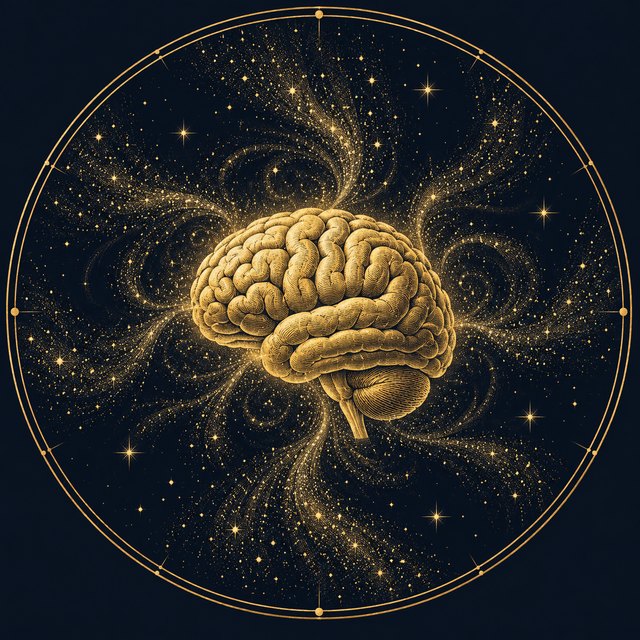
The brain in the void
Boltzmann's own answer was that our tidy corner is a rare fluctuation in an eternal, mostly disordered universe. His critics saw the catch, and a century later it got a name. A fluctuation that makes one brain, complete with false memories of a universe, is enormously more likely than one that makes a whole universe. So on that theory you are almost certainly a brain that just condensed out of the void and will dissolve in a moment, and everything you remember is false.
Not solved, and taken seriously: cosmologists use it as a test, since any theory that predicts more such brains than real observers is in trouble. Nobody believes it. Nobody has quite got rid of it either.
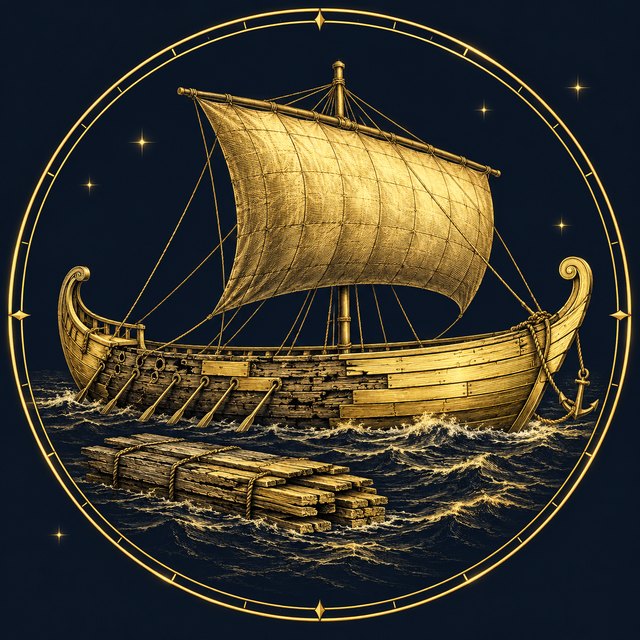
The ship of Theseus
The Athenians kept the ship Theseus sailed home in, Plutarch says, and replaced each plank as it rotted, until not one plank was original. Was it still the ship? And if someone had kept the old planks and built them back up, which of the two was it? Most of the atoms in your body are not the ones you had ten years ago. The pattern stayed and the matter passed through it.
No solution, because it is a question about words, and about us. It is the same thing this site says about the cosmos: what lasts is the order, not the stuff.
What the shelf says
Every paradox on this page is a place where two things we are sure of cannot both be true, and the shelf splits in three. For some, one of the two things was never true: the tortoise's clock, the eternal sky, the twin who thinks turning round is nothing. For some, both things are true and the word was wrong: infinity does not mean what a hotel means, and a ball cut into dust is not a ball. And for a few, the faint Sun, the empty galaxy, the brain in the void, the two things really do stand there and stare at each other, and the honest answer is that we are still looking. That is the condition this whole site is written in. The open questions are the ones with the longest stare.