
From the porch to the edge of what can be seen
How big it is
The Moon, the Sun, a hundred billion stars, and a count nobody has finished
Voyager 1 has been flying for forty-nine years and is about to reach one light-day from home. The nearest star is four years past it. This page is the ladder from here to the edge, in pictures you can hold, with the numbers checked and the arguments about them left in.
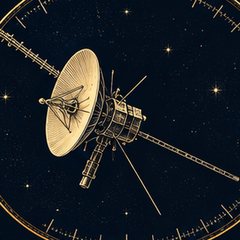
Voyager 1, launched September 5, 1977One light-day from home on November 18, 2026at 12:16 in the morning, Central time
Light from the Moon reaches us in a little over a second. Light from the Sun takes eight minutes and nineteen seconds, so the Sun you see is always eight minutes old. On November 18, 2026, at 12:16 in the morning Central time, the Voyager 1 spacecraft reaches the point where light takes a whole day to get back to us: about sixteen billion miles. It left in 1977, it is moving at about 38,000 miles an hour, and it is the farthest thing people have ever made. It has taken forty-nine years to cover the distance light covers between breakfast and breakfast.
The nearest star after the Sun is called Proxima Centauri. Its light takes four years and three months to get here. At Voyager's speed the trip would take about seventy-five thousand years, and Voyager is not even pointed that way.
Make it small enough to hold
Numbers this size slide off the mind, so shrink everything until the Sun is an orange on your kitchen table.
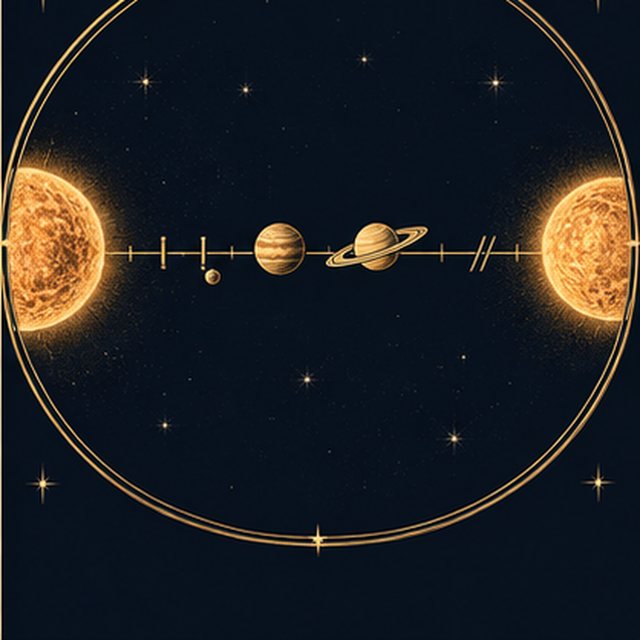
- The Earth is a grain of coarse sand thirty-five feet from the orange. The Moon is a speck an inch from the grain.
- Jupiter is a pea a little over sixty yards away. Neptune is a grain of rice about a fifth of a mile down the road.
- Voyager 1, after forty-nine years, is a mile and a sixth from the orange.
- The nearest star is another orange about eighteen hundred miles away. Nothing at all in between.
On the same scale the whole Milky Way, a hundred billion oranges or more with that kind of room between each one, would stretch about forty-two million miles, almost half the real distance from the Earth to the Sun. And the next big galaxy, Andromeda, would be past the real orbit of Saturn. The second thing to feel about the universe, after how big it is, is how empty. Nearly all of it is the space between.
Ride a beam of light
The fastest thing there is goes 186,000 miles every second. Here is a beam of it leaving the Earth right now, running in real time. Start it and watch how fast it passes the Moon, then how long the trip to the Sun takes, and then how long it sits in the dark heading for the nearest star.
Count them
Nobody has counted the stars in the Milky Way, and nobody can. Astronomers weigh the galaxy by how fast it spins, take the share of that weight that is stars, and divide by the weight of an average star. That gives somewhere between a hundred billion and four hundred billion, and the spread is the honest answer. If you counted one star every second, day and night, a hundred billion would take you about 3,200 years.
Counting one star a second since you opened this page.
Then there are the other galaxies. Hold a grain of sand out at arm's length against the night sky. It covers a tiny patch of black. In 2022 the Webb Space Telescope looked at a patch that size for twelve and a half hours, and this is what was in it.
Every speck in that picture except the few with spikes is a galaxy, each one with its own billions of stars. The bright arcs are galaxies far behind the cluster in the middle, stretched by its gravity like images in the bottom of a glass.
So how many galaxies are there? The number you will see everywhere is two trillion. It comes from a 2016 study that counted the galaxies Hubble can see and modelled the faint ones it cannot, and concluded that nine in ten are too faint to see. In 2021 the team running the New Horizons probe, out past Pluto, used its camera to measure how dark space really is, from a place where no sunlit dust gets in the way. It was about ten times darker than the darkest sky Hubble can see, and the headlines said there might be only a few hundred billion galaxies after all. Then the institute that put out the news corrected its own release: the darkness limits how much light all the galaxies give off together, not how many there are. The honest answer is somewhere between a few hundred billion and two trillion. The experts' count of the universe moves by a factor of ten, and they say so.
The long way out
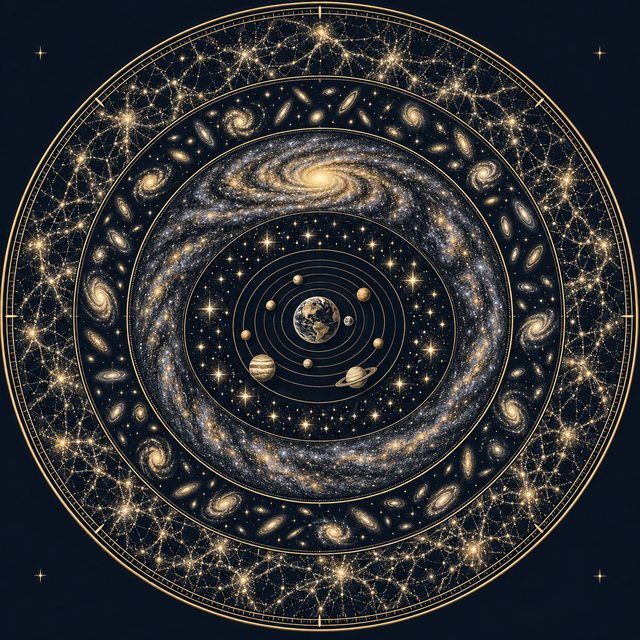
Here is the whole ladder at once. It starts at the Earth and steps out nine times, to the planets, to the edge of the Sun's reach, to the neighbour stars, to the Milky Way, to the galaxies around it, to Laniakea and to the web of everything we can see. Drag to turn it, scroll or use the dial to step out, and read the real size and the real count at every stop. The jumps between steps are huge and are drawn as if they were small; that is the only lie in it.
The last step is the strangest. The universe is 13.8 billion years old, and yet the part we can see is about 93 billion light years across. That is not a mistake. The light from the farthest galaxies set out 13.8 billion years ago, and the space it was crossing kept stretching the whole way, so those galaxies are now about 46 billion light years off in every direction. And that is only the part whose light has had time to reach us. Past it the universe goes on, and nobody knows how far, or whether it stops.
The far things
The ladder has its landmarks, and each one has a story about how we found out. Here they are, each with its honest note.
VAR!
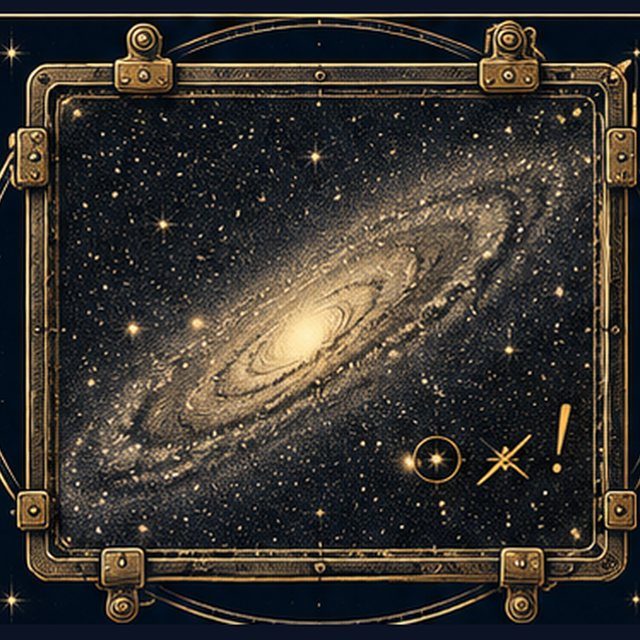
Until 1923 the Milky Way was very nearly the whole universe. The fuzzy spirals in the telescopes were thought to be clouds of gas inside it. On the night of October 5, 1923, Edwin Hubble photographed the Andromeda spiral with the largest telescope on Earth, on Mount Wilson in California, and marked three spots on the glass plate N, for nova. Then he noticed that one of them brightened and dimmed every 31.4 days. It was a Cepheid, the kind of star whose rhythm tells you how bright it really is, and so how far away. He crossed out the N and wrote VAR! The answer was about 900,000 light years, far outside the Milky Way. Andromeda was another galaxy, and the universe went from one galaxy to more than anyone could count in a single letter. Harlow Shapley, who had argued the Milky Way was everything, is said to have read Hubble's letter and said "here is the letter that has destroyed my universe."
Shapley's line comes to us secondhand and the wording changes from telling to telling. Hubble's distance was also too short by more than half: it took until 1952 for Walter Baade to work out that there are two kinds of Cepheid, and today Andromeda sits 2.5 million light years away. The plate is real and kept at the Carnegie Observatories, exclamation mark and all.
The empty patch
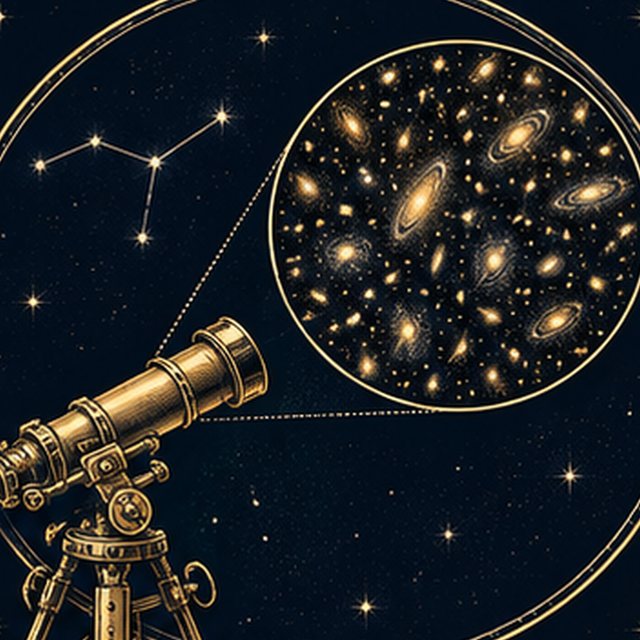
In December 1995 Robert Williams, who ran the institute that operates the Hubble Space Telescope, spent his own share of its time pointing it at nothing. He chose a patch of sky near the handle of the Big Dipper with as few known stars and galaxies in it as he could find, about the size of a pinhead held at arm's length, and stared at it for ten days. Colleagues told him it was a waste of the most valuable telescope in the world. He said he would resign if it came up empty. It came up with about three thousand galaxies.
The first count was fifteen hundred and it doubled as people looked harder. The point of the picture is that the patch was chosen for being empty, and no part of the sky is empty. Point anywhere, wait long enough, and it fills.
More than the sand
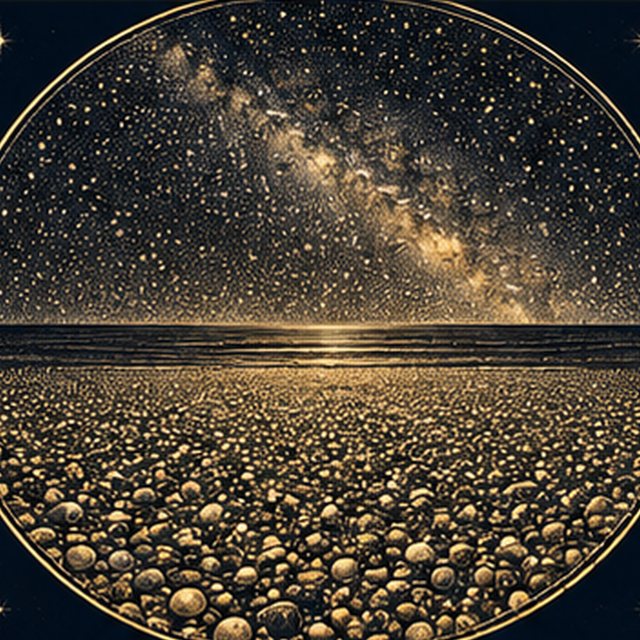
Carl Sagan said in 1980 that there are more stars in the universe than grains of sand on all the beaches of Earth. Researchers at the University of Hawaii checked the sand. They counted the grains in a teaspoon, worked out how many teaspoons there are in the world's beaches and deserts, and got about seven and a half billion billion, a 75 followed by seventeen zeros. The stars, by the European Space Agency's rough sum, come to somewhere between a 1 with twenty-two zeros and a 1 with twenty-four. Even the low end is about thirteen hundred times the sand.
Both counts are rough, and the star count is rough by a factor of a hundred. It does not matter here. The gap is so wide that Sagan's line holds whichever end you take.
The largest star
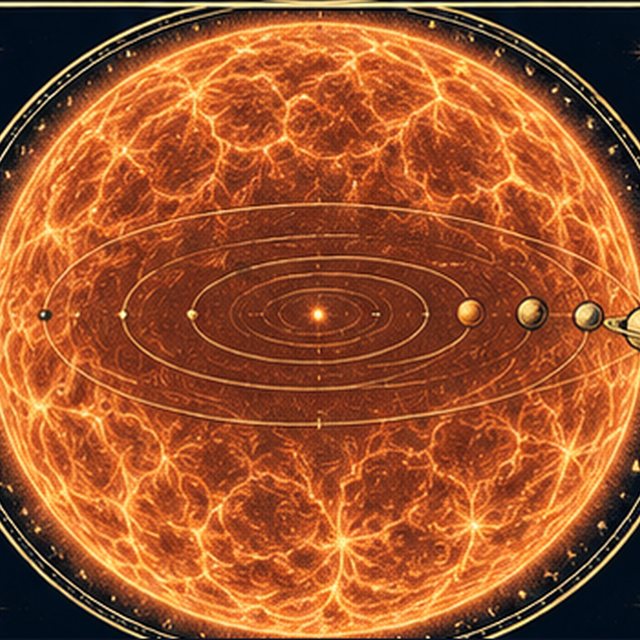
The largest star we know of is called Stephenson 2-18, about 19,000 light years away in a cluster of red supergiants. Its width is estimated at around 2,150 times the Sun's. Put it where the Sun is and its surface would reach out past Jupiter to about the orbit of Saturn. Light, which crosses the Sun in a few seconds, would take close to nine hours to cross it.
Stars this big have no clear edge, just gas thinning into space, and their distances are uncertain, so the estimates run from about 1,500 to 2,150 times the Sun. UY Scuti held the title before, at around 1,700. Expect the record to change hands again.
Immense heaven
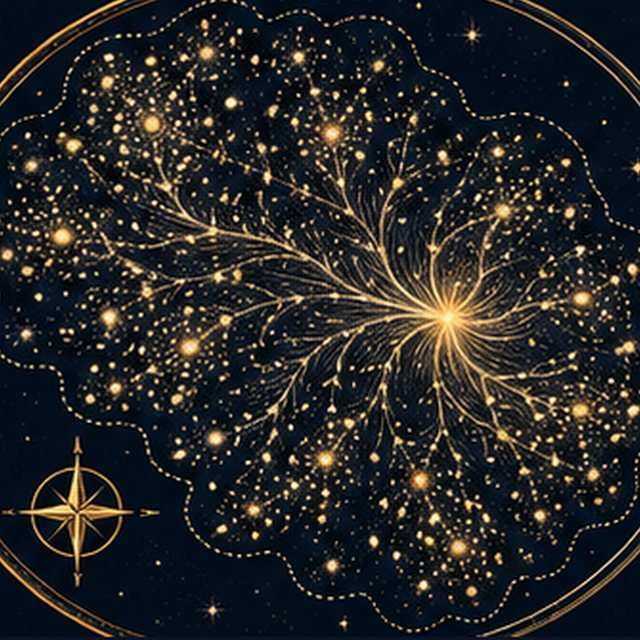
In 2014 a team led by Brent Tully at the University of Hawaii mapped how about eight thousand nearby galaxies are moving and drew our home supercluster the way you draw the basin of a river: every galaxy inside the line is drifting toward the same low place, a region called the Great Attractor. The basin holds about a hundred thousand galaxies and is about five hundred million light years across. They named it Laniakea, Hawaiian for immense heaven. The Milky Way sits out near one edge.
The edges are drawn from motions, and other astronomers point out they could move as more galaxies are measured. The number 520 million light years that circulates online is not in the sources; the team gives about 500.
A coin toss
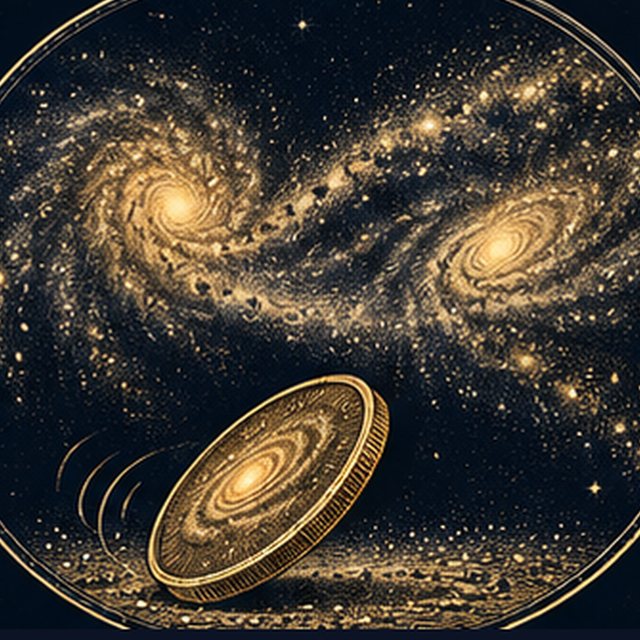
Andromeda is coming toward us at about 110 kilometres a second. For years the forecast was a certain collision in about five billion years, and the merged galaxy even had a name, Milkomeda. In 2025 a team led by Till Sawala ran a hundred thousand versions of the future using Hubble and Gaia measurements, and found that the chance of a merger in the next ten billion years is about even. The Large Magellanic Cloud, a small galaxy circling ours, tugs the Milky Way off course just enough. The future of our galaxy is a coin toss.
Either way, nothing happens to anyone for billions of years, and even a full merger would hardly touch the stars themselves. The gaps between stars are so wide that two galaxies can pass through each other with almost no collisions at all.
One percent
Gaia, the European space telescope that spent more than ten years measuring the positions of stars, has mapped about 1.8 billion objects. It is the best map of the galaxy ever made, and its own team says it covers roughly one percent of the stars in the Milky Way.
Not all of the 1.8 billion are stars; a few are galaxies and quasars far behind them. The one percent is the team's own estimate, and it depends on how many stars the Milky Way has, which is itself the 100 to 400 billion that nobody can pin down.
The same rules all the way out
In 1584 Giordano Bruno wrote that every star is a sun with its own worlds, and that the universe has no edge. The Church burned him in Rome in 1600, mostly for his theology, though the infinite worlds did not help. About seventy years later Blaise Pascal looked at the same sky and wrote the sentence most people feel and do not say: the eternal silence of these infinite spaces frightens me.
Here is what this site would add. The light that left Andromeda two and a half million years ago, before there were people, carries the same fingerprint of hydrogen as a lamp in a laboratory. The galaxies at the edge of the Webb picture fall by the same gravity as an apple. The stars in Laniakea burn by the same arithmetic as the Sun, and the sand on the beach and the dust in Hubble's empty patch are made of the same handful of elements, the ones on the chart on the wall of every chemistry classroom.