
Somewhere before 1000 BC to 1852, Horeb, a Persian river, Bodh Gaya, the Rijupalika, a western pass, Qufu, the Jordan, Hira, the Kali Bein and the Siyah-Chal
The day it began
Moses, Zoroaster, the Buddha, Mahavira, Laozi, Confucius, Jesus, Muhammad, Guru Nanak and Baha'u'llah
Ten people founded religions that are still practised, and nine of the ten said that on one particular day something told them what to do. This page goes to the oldest surviving text for each and tells that day as it is told there, with the plate for the place. Then the instrument counts the one number this page can stand on, the years between the man's death and the earliest page that tells his story, which runs from zero to about two thousand.
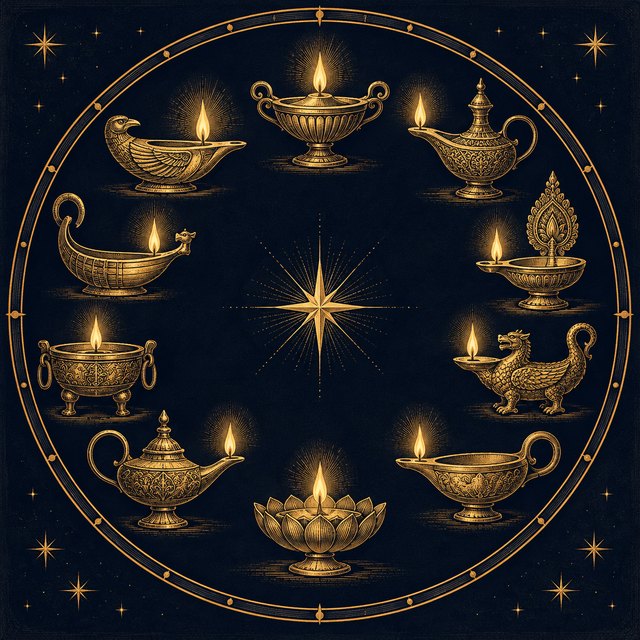
Ten people founded religions that are still practised, with living followers in the billions between them, and this page puts them in a row and asks only one thing of each: what did he say happened on the day it began? Not what his followers built, and not whether it is true, but the moment as it stands in the oldest surviving text, told as that text tells it, with the plate for the place. Nine of the ten said something spoke to them. One said that nothing spoke to anybody and taught the most durable system of the lot anyway.
The lineage on this site runs from Pythagoras, who said the world is number, to the people now arguing about whether the dials of physics were set. These ten belong to a different lineage that was running at the same time and often in the same century. Five of them, Zoroaster, the Buddha, Mahavira, Laozi and Confucius, fall into the few hundred years that a German philosopher called the axis of history, when, from Greece to China, people who had never heard of each other began asking the same question the pattern shelf asks: is there an order, and can a person stand in it? Their answer was not a measurement. It was a day.
What follows is not a comparison of faiths and takes no side between them. It is the ten days in order of age, each with its source and the honest distance between the man and the page, and then an instrument that puts those distances side by side, which is the one measurement this page can make.
Moses. Tradition puts him in the thirteenth century BC
A bush on the mountain that burned and was not burnt
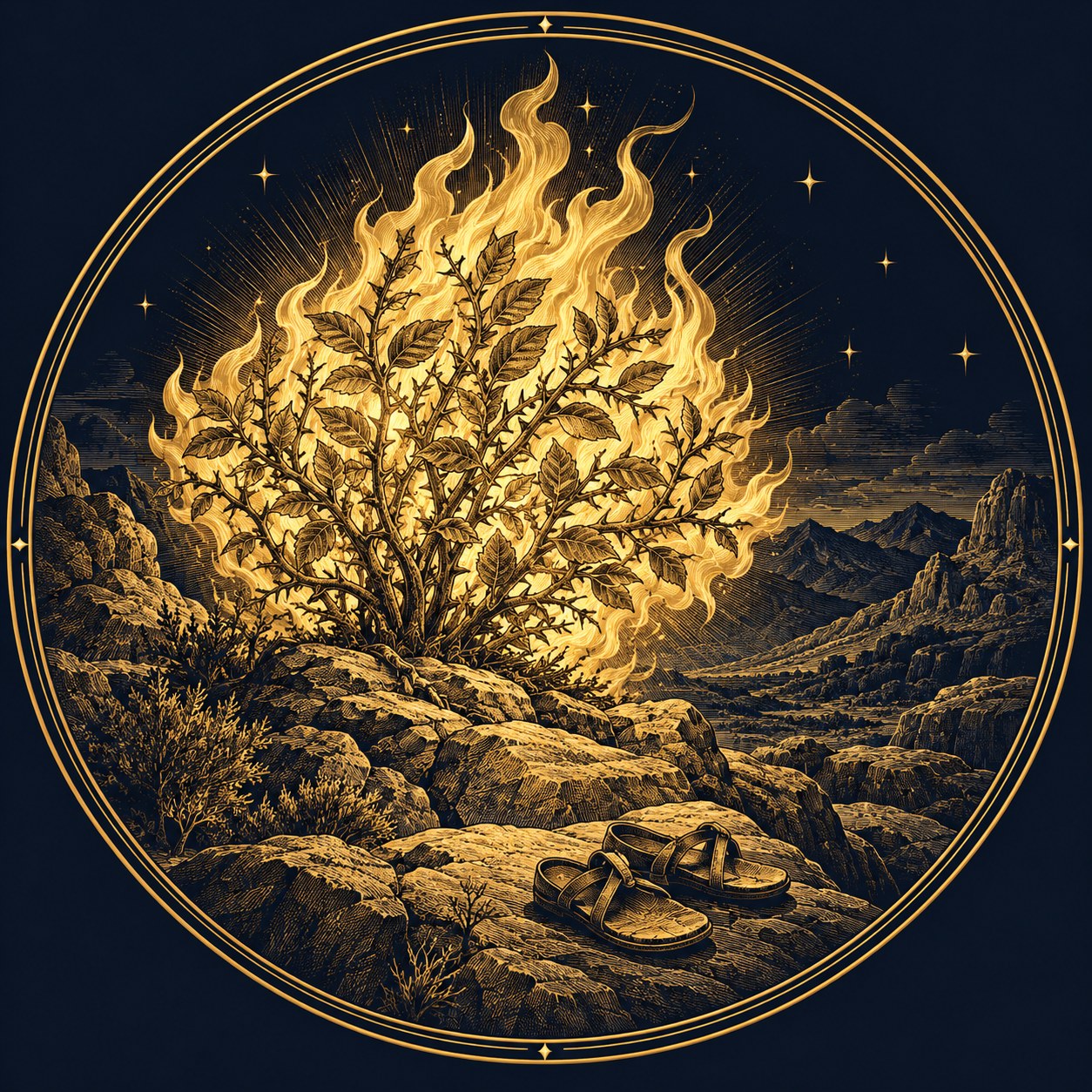
He was keeping his father-in-law's sheep in the wilderness and came to Horeb, the mountain of God, and saw a thorn bush on fire that did not burn away. He turned aside to look, and a voice from inside the fire said his name twice, told him to take off his sandals because the ground was holy, and told him it had seen the misery of his people in Egypt and was sending him. He asked what name he should give, and the answer was I am who I am.
Source and distance. Exodus 3, composed in Jerusalem in the seventh or sixth century BC, something like six or seven hundred years after the time the story is set. There is no inscription, record or object from Egypt or Sinai that mentions him, and many historians think the figure gathers up a tradition rather than a man. The story is Israel's, and Israel told it for centuries before writing it down.

Zoroaster. Somewhere between 1500 and 600 BC
A shining figure at the river at dawn
At thirty he went down to the river Daiti at dawn to draw water for the morning rite, and as he came up out of the water a figure of light nine times a man's height stood on the bank. It was Vohu Manah, Good Mind, and it led him into the presence of Ahura Mazda, the Wise Lord, who taught him. He came back and began to preach against the old sacrifices, and for ten years nobody listened but one cousin.
Source and distance. The hymns called the Gathas are in a dialect so old that they are taken to be his own words, carried by priests who learned them by heart for well over a thousand years before anyone wrote them down. The river story itself is told in Pahlavi books of the ninth century AD, between fifteen hundred and two thousand years after him, depending on which of the disputed dates is right. The dates are disputed by a thousand years.
The Buddha. Died about 400 BC
A fig tree at Bodh Gaya, as the night ended
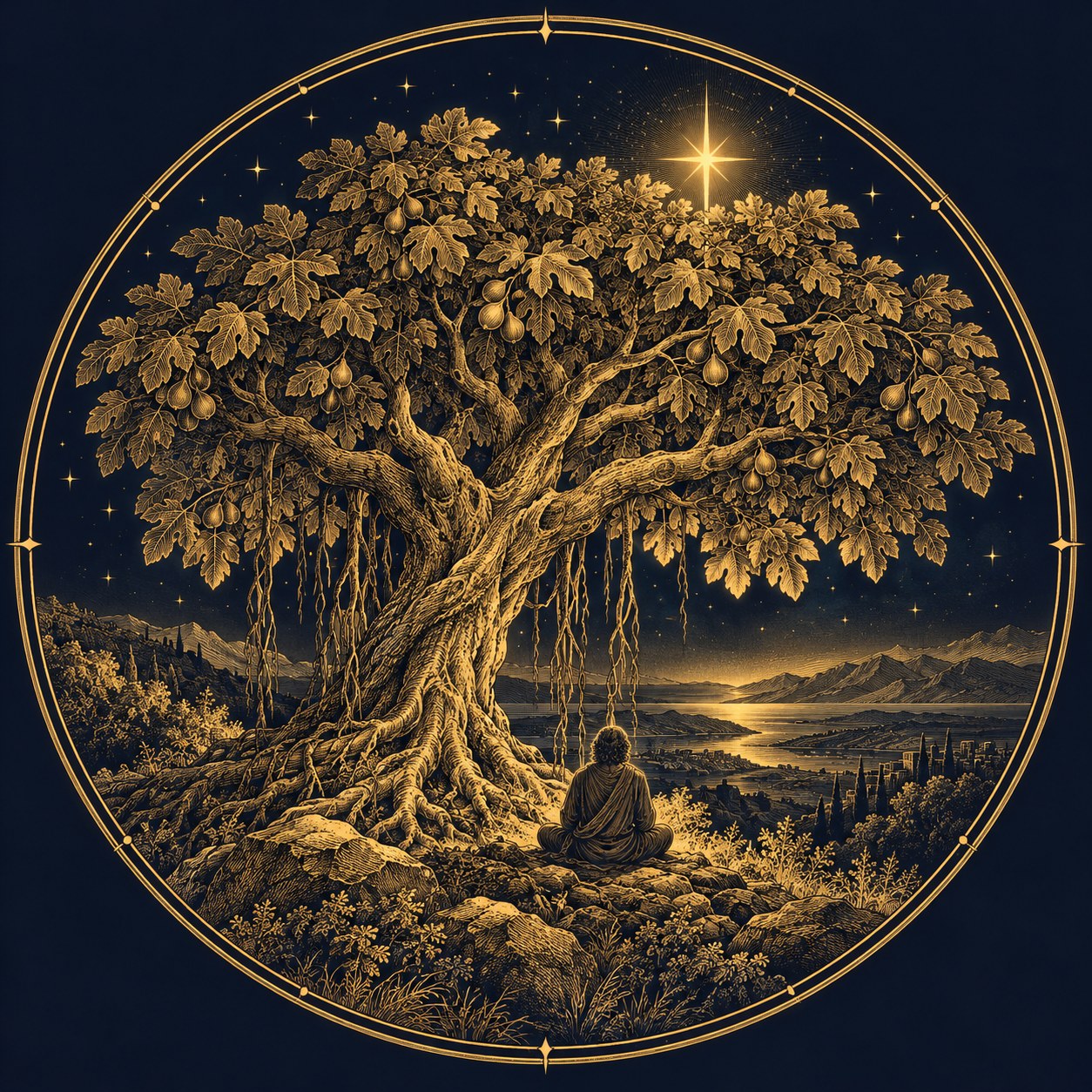
Siddhartha Gautama, a nobleman who had left home at twenty-nine to find a way out of ageing, sickness and death, sat down under a pipal fig tree by a river in Magadha and resolved not to get up. Through the night, as the Pali texts tell it in three watches, he remembered his past lives, saw how beings rise and fall by their deeds, and understood the four truths about suffering and the end of it. As the night ended he knew he was awake. The morning star rising over the leaves is the way the later schools in China and Japan told the moment.
Source and distance. The oldest accounts are in the Pali canon, which was recited by monks for about three centuries and first written on palm leaves in Sri Lanka in the first century BC, some three hundred and seventy years after his death. The night under the tree is told in his own voice in the Discourse on the Noble Search.
Mahavira. Died 527 BC by Jain reckoning, perhaps a century later
A sal tree by the river, in the twelfth year
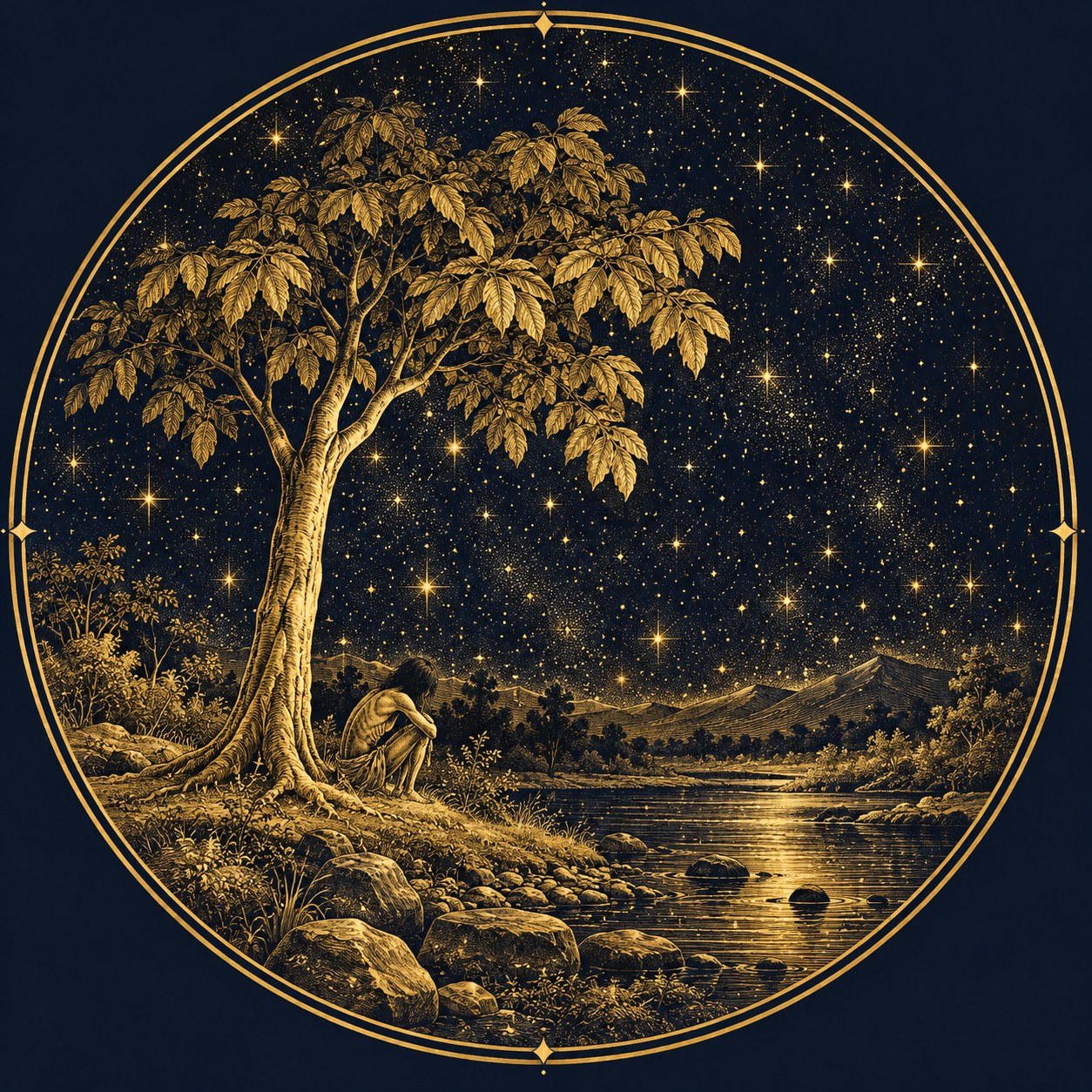
Vardhamana, called Mahavira, the great hero, gave away everything at thirty, pulled out his hair in five handfuls, and walked naked for twelve years, fasting, silent, letting insects bite him, sleeping as little as he could. In the thirteenth year, on the north bank of the Rijupalika river outside a village called Jrimbhikagrama, in a field, under a sal tree, squatting on his heels with the sun beating down and his knees up by his head, after a fast of two and a half days, he reached kevala, the whole knowledge, and from then on knew, the text says, everything that every being in the world thought, said or did.
Source and distance. The Kalpa Sutra, which tells this, belongs to a canon the Jain monks recited for centuries and fixed in writing at a council at Vallabhi in Gujarat in the fifth century AD, nine hundred and eighty years after his death by their own count. The Jains and the Buddhists were neighbours and rivals, and the two founders may have been alive at once.
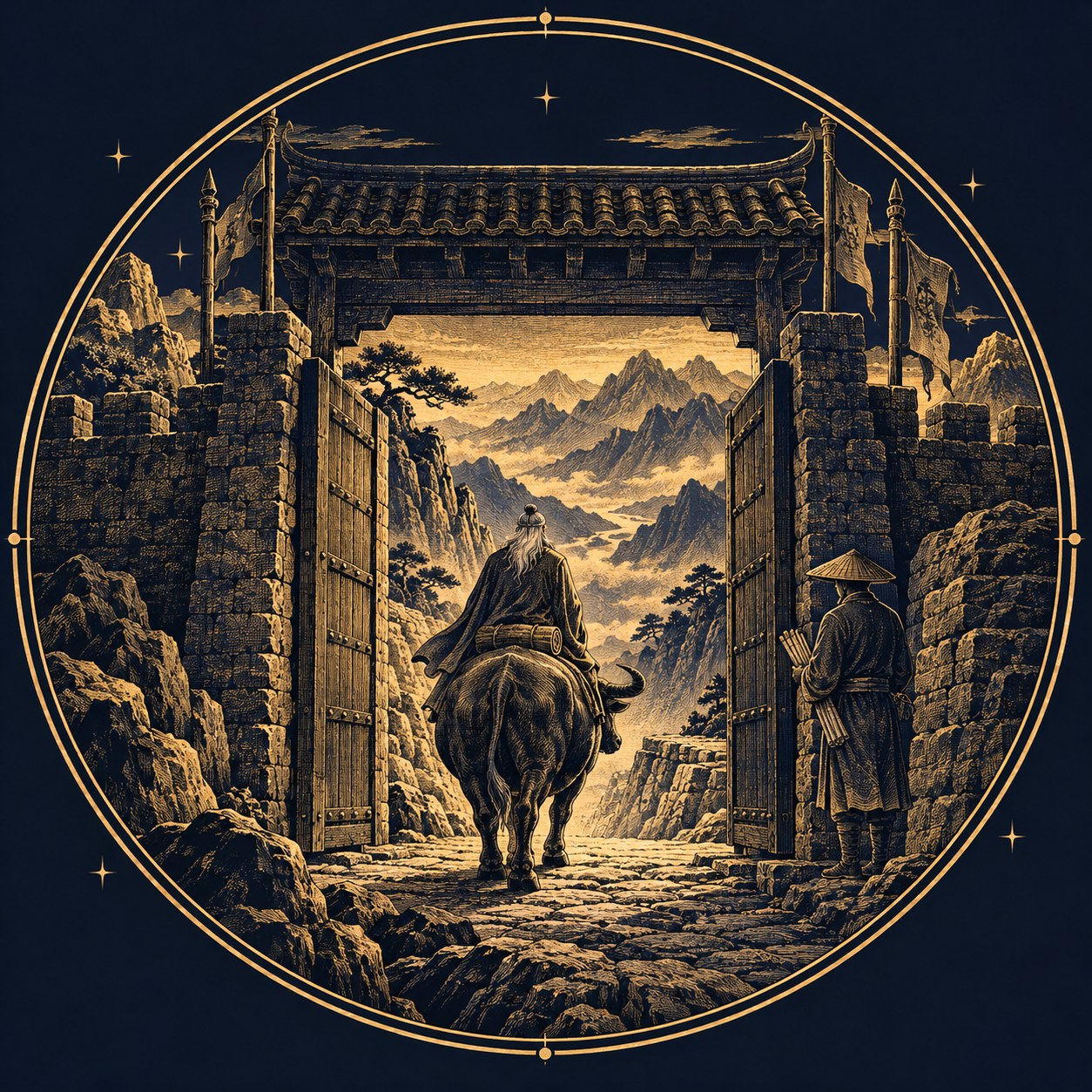
Laozi. Sixth century BC by tradition, if he lived at all
The gatekeeper at the western pass asked him to write it down
{'He was keeper of the archives at the court of Zhou, grew old there, and seeing the court in decline he left, riding west. At the pass the keeper of the gate, Yin Xi, said': 'you are going into hiding, write a book for me first. So he wrote two chapters on the way and its power, about five thousand characters, handed them over and went on, and nobody knows where he died. The water buffalo he rides in the plate was added by painters a thousand years later.'}
Source and distance. The gate story is in the Records of the Grand Historian, about 94 BC, and its author admits that he does not know who Laozi was, offers three candidates, and gives the man an age of a hundred and sixty or two hundred. The book itself exists on bamboo slips from a tomb at Guodian sealed around 300 BC. Most scholars treat the author as a title rather than a person.
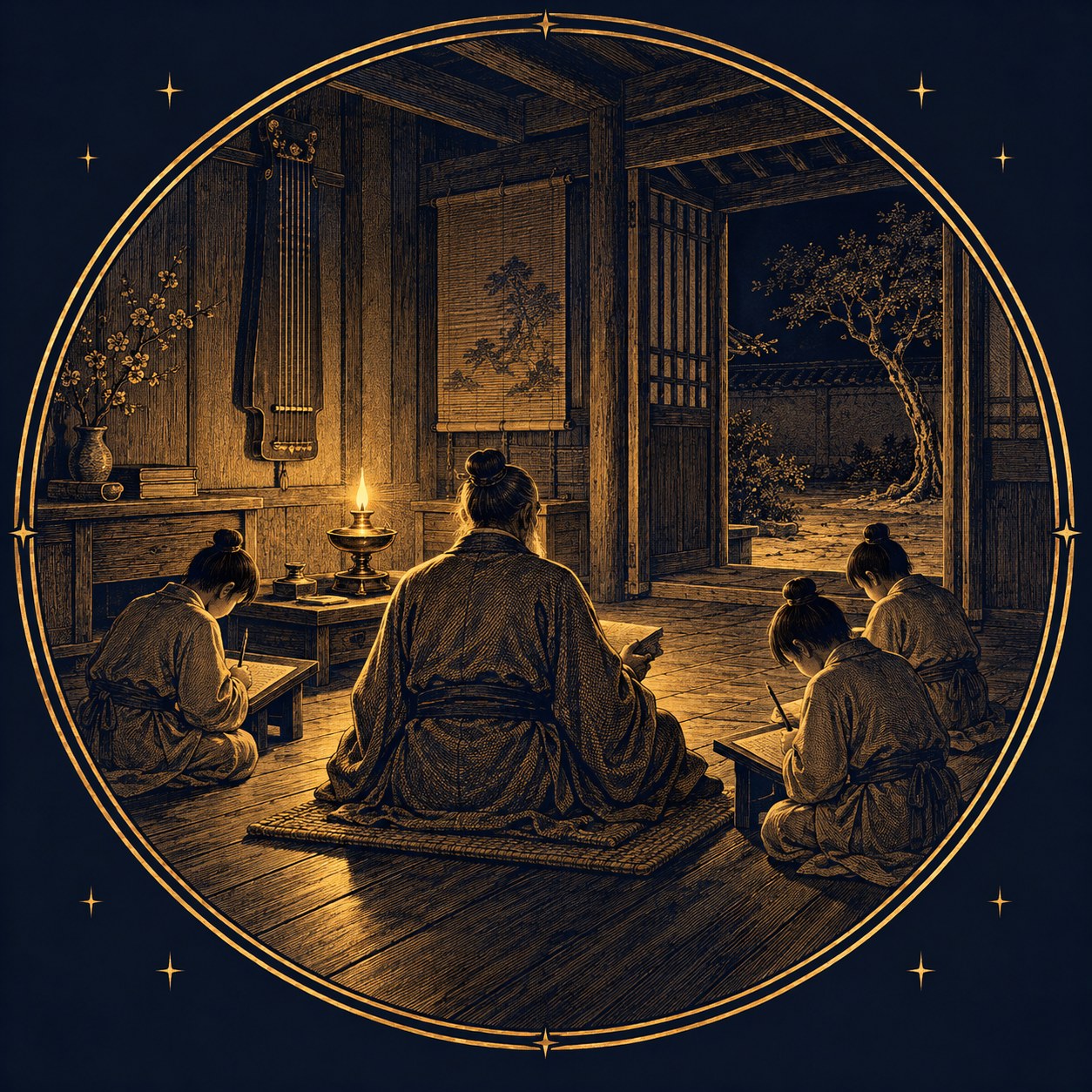
Confucius. 551 to 479 BC
Nothing told him anything, and he said so
He is the one on this page with no day. He taught in a hall in Qufu to anyone who brought a bundle of dried meat as a fee, and when asked about spirits he said he did not yet understand the living. He said he transmitted and did not create, that at fifty he came to know what Heaven required, and that Heaven did not speak but the seasons turned and things were born all the same. The sayings his pupils' pupils wrote down are the longest-lived system of conduct on Earth, and the only one here that began with a lamp instead of a light from the sky.
Source and distance. The Analects were compiled over several generations after his death, and the oldest copy is from a tomb at Dingzhou sealed in 55 BC. The gap to the compilation is somewhere between a hundred and two hundred years, and the sayings are brief enough that oral memory could carry them well.
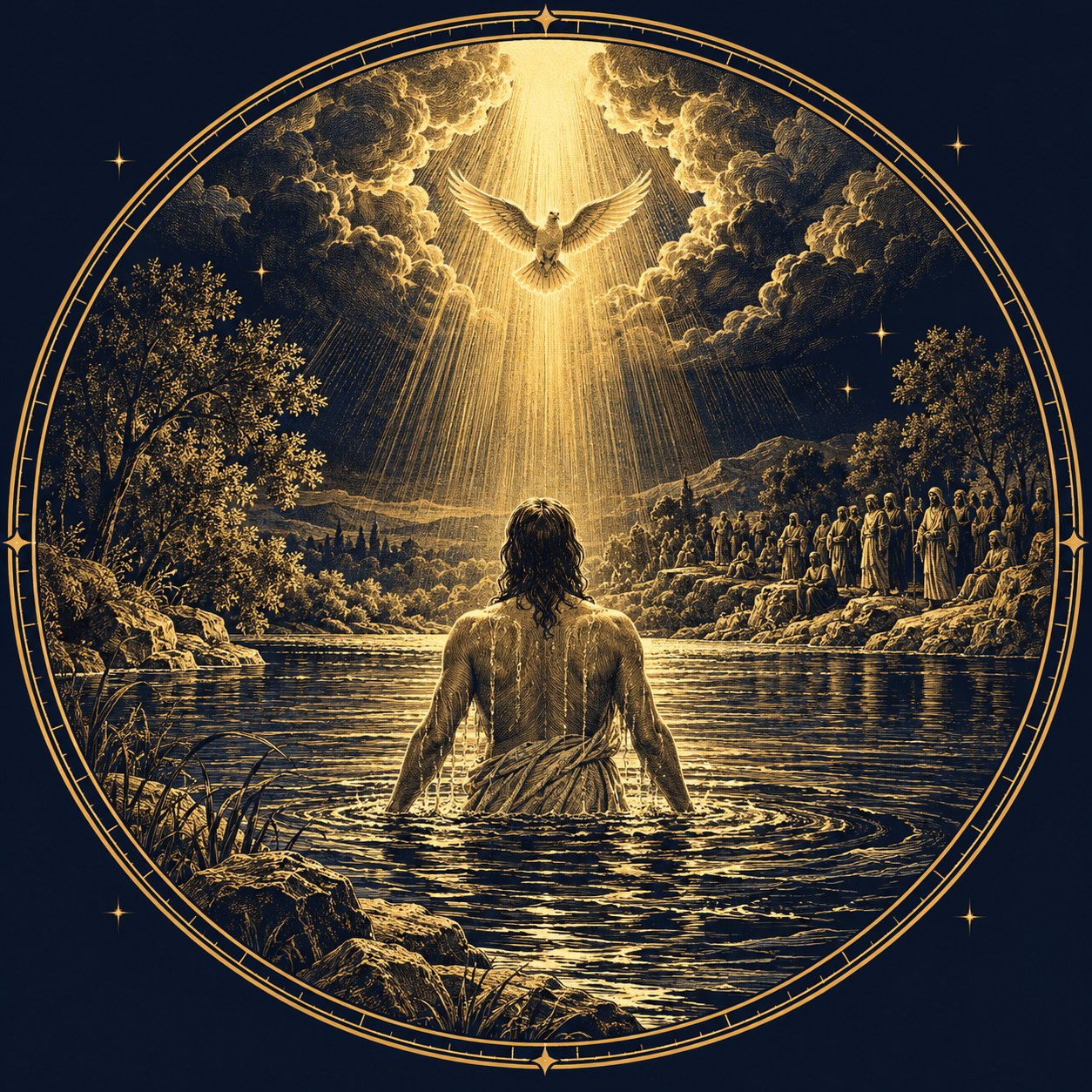
Jesus. About 4 BC to AD 30
Up out of the Jordan, the sky torn open
He came from Nazareth to the river where John was baptising and went under the water, and as he came up, in the oldest telling, he saw the sky torn apart and the Spirit coming down on him like a dove, and a voice said you are my son, the beloved, in you I am well pleased. The Spirit then drove him into the desert for forty days. The crowd on the far bank is in the later gospels; in the oldest one the vision is his alone.
Source and distance. The gospel of Mark, about AD 70, forty years after. Paul's letters are earlier, from the fifties, and never mention the baptism; they go straight to the death and the third day. No Roman or Jewish record from his lifetime mentions him, and the first outside notice, in the Jewish historian Josephus, is from the nineties.

Muhammad. About 570 to 632
A cave on the mountain of light, and the word recite
{'At forty he had taken to spending nights alone in a cave on a bare mountain above Mecca. One night in the month of Ramadan something came to him and said recite, and he answered that he could not read. It pressed him until he thought he would die, and said it again, and a third time, and then the first words of the Quran came': 'recite, in the name of your Lord who created, who created man from a clot. He went home shaking and said to his wife, cover me. The cave in the plate is empty on purpose; he is not drawn.'}
Source and distance. The five verses are the Quran's, and the Quran was fixed in writing about twenty years after his death. The story of the cave is in the biography by Ibn Ishaq, written about a hundred and thirty years after, and surviving in a later edited copy. Of the ten here he is the one whose own words reached the page soonest after his death, and whose story is nearest in time to the man.

Guru Nanak. 1469 to 1539
Three days under the river
{'At about thirty, working as a storekeeper for a governor at Sultanpur, he went down to the river Bein one morning to bathe and did not come up. His clothes were on the bank. The town dragged the river and gave him up for drowned. On the third day he walked out of the water and said nothing at all for a day, and the first thing he then said was': 'there is no Hindu, there is no Muslim. In the river, the story says, he had been taken into the presence of God and given a cup of nectar and told to go and repeat the Name. He spent the next twenty years walking. The three days are the same three as the Three days page.'}
Source and distance. The story is in the Janamsakhis, lives of Nanak whose oldest surviving manuscripts are from the seventeenth century, about a hundred years after him. His own hymns, nearly a thousand of them, were gathered into the Adi Granth in 1604, sixty-five years after his death, by the fifth Guru, with a care about wording that the other traditions here would envy.
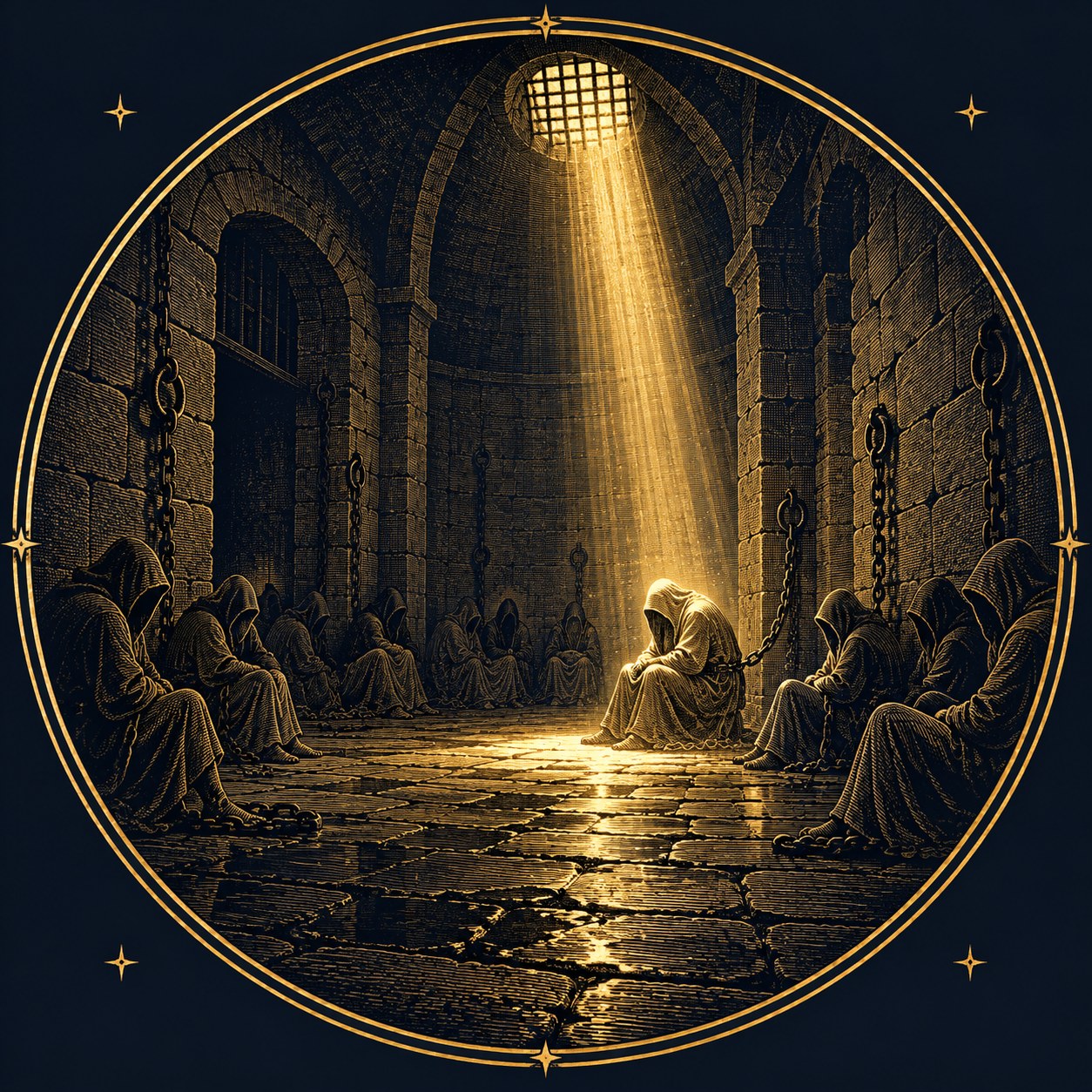
Baha'u'llah. 1817 to 1892
A dungeon in Tehran, chained, and a voice
In August 1852 some followers of the Bab tried to shoot the Shah of Persia and missed. Mirza Husayn Ali, a nobleman who had joined the movement and had nothing to do with the attempt, was marched barefoot to the Siyah-Chal, the black pit, a former cistern under Tehran, and chained in the dark with the others for four months, two of the chains so heavy they have names. There, he wrote later, he felt something flow from the crown of his head over his breast like a mighty torrent, and heard a voice from all sides saying that he would be made victorious by himself and by his pen. He said nothing of it for ten years. The maiden some accounts put in the dungeon is in his own later writing.
Source and distance. His own hand. He wrote the account in the Epistle to the Son of the Wolf in 1891, the year before he died, thirty-nine years after the dungeon. The distance between the man and the page is zero, and the distance between the day and the page is most of a life, which is its own kind of gap.
The instrument
The bars below are the years between each founder's death and the oldest surviving telling of the day described above, on a scale where each step across is ten times the last. Hover a bar to read where the number comes from and how sure it is. The bars for Moses and Zoroaster have to be read with the warning that nobody agrees within centuries on when either man lived, and that at least one of the ten may be a title rather than a person.
The honest part
A long gap does not make a story false and a short one does not make it true. The Gathas were carried by heart for longer than the English language has existed and kept their metre intact, because the priests who carried them were punished for a syllable; and a thing written the week it happened can be a lie. What the gap does is tell you whose voice you are hearing. For Baha'u'llah and, through the Quran, for Muhammad, it is the man's. For Jesus it is people who knew people who knew him. For the Buddha and Mahavira it is a monastic order remembering its founder across centuries, with the founder's biography growing as it went. For Moses, Zoroaster and Laozi it is a nation or a priesthood telling the story of someone at the edge of memory, who may be several people or none.
Two more things. The ten days rhyme, and the rhyme is suspicious as well as beautiful. A river at dawn, a tree, a cave, a mountain, a voice, a period alone in the wilderness first: these are the places and the shape that a people expects its founder's story to have, and later tellers tidy earlier lives toward it. Nanak's three days under the water are the three days of the previous page, and whoever first told the story knew that. And the one with no day, who said he transmitted and did not create, is a reminder that a religion does not need a light from the sky to last two and a half thousand years. It needs people who keep saying the words.