
AD 320 to 1999, Alexandria, Prague, Ghent and Ann Arbor
Six
Pappus of Alexandria, Kepler, Plateau and Thomas Hales
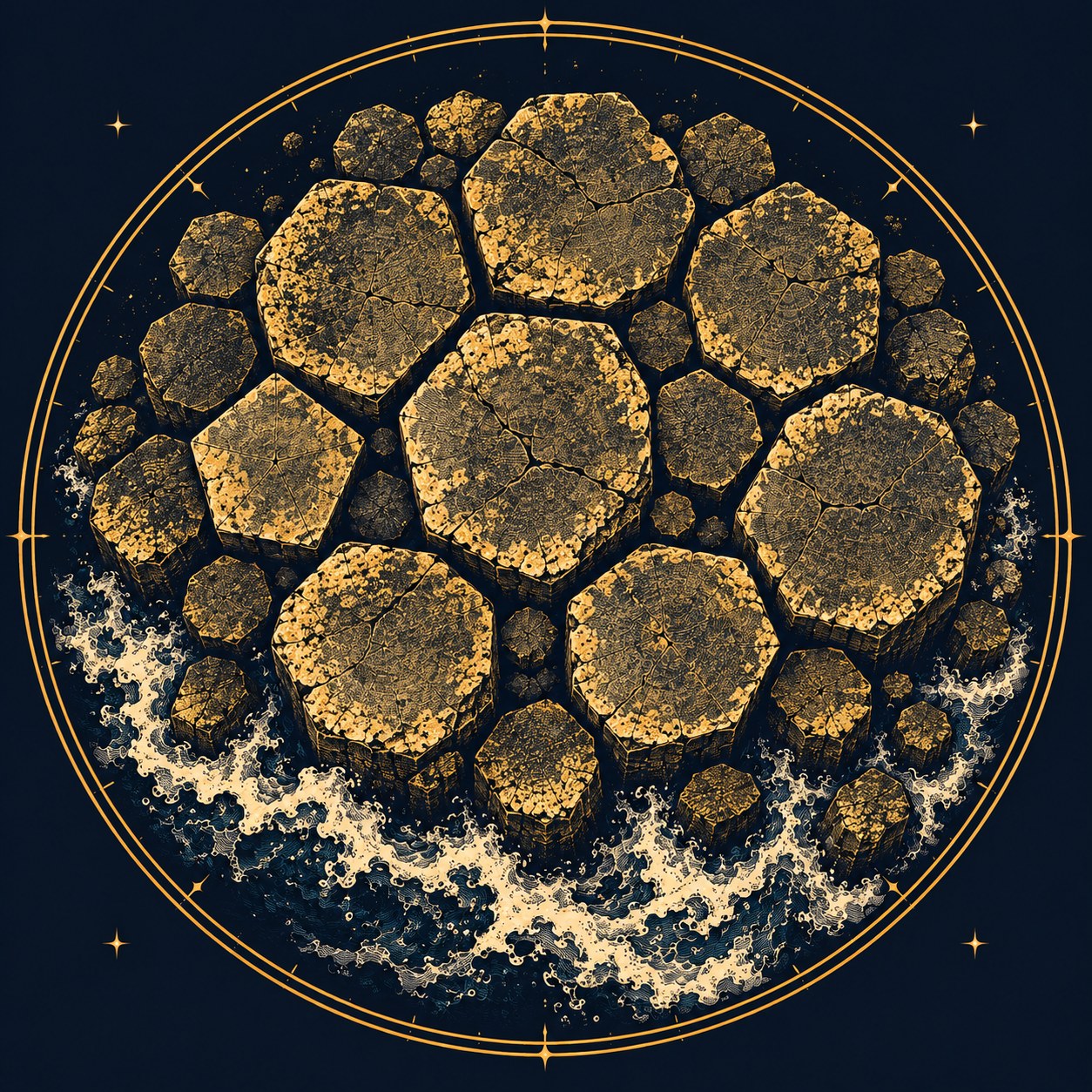
Honeycomb, the basalt columns of the Giant's Causeway, a snowflake, the eye of a fly, the storm at Saturn's north pole and the ring in a benzene molecule all have six sides. Nothing aimed at six. It is what equal things settle into when they are pressed together, and in 1999 someone finally proved it.
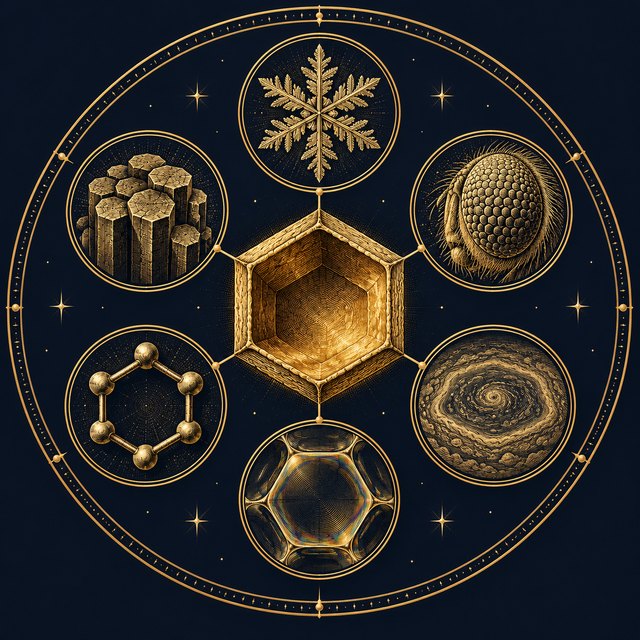
Count the sides. A cell of honeycomb has six. A column of the Giant's Causeway has six, more often than not. A snowflake has six arms, every one of them, and no snowflake has ever been found with five or seven. The lens of a fly's eye is a mosaic of six-sided facets. The ring at the heart of benzene is six carbon atoms. And at the north pole of Saturn there is a storm, wider than two Earths, that has held the shape of a hexagon since before anyone was looking. Six is not a number nature is fond of. It is a number nature is pushed into, and the pushing is the subject of this page.
The bees' arithmetic
Pappus of Alexandria noticed, around the year 320, that only three regular shapes tile a floor without gaps: triangles, squares and hexagons. Bees, he wrote, had the sagacity to pick the one of the three that holds the most honey for the least wax. He was right about the shapes and wrong about the sagacity, and it took sixteen centuries to sort out which was which. Kepler took the question up in 1611, in a little book he wrote as a New Year's gift for a friend in Prague, asking why every snowflake has six corners. He had no answer, and said so, but along the way he guessed how cannonballs pack tightest and noticed that pressed spheres, like peas in a pod, come out with flat faces. Darwin, in the Origin, called the hive bee's comb absolutely perfect in economising labour and wax, and spent pages on how a creature with no geometry could build it. Only in 1999 did Thomas Hales, in Ann Arbor, prove the thing Pappus had assumed: of every way to divide a flat surface into equal areas, the honeycomb uses the least total edge. Not just among the regular shapes. Among all shapes, curved or straight, regular or not. The bees were not clever. They were pressed.
The pushing
Here is the push. Take a lot of equal things and let them grow, or crowd, or shrink, until they meet. Circles first, because anything spreading evenly from a point is a circle. Pack circles as tightly as they go and each one touches six others; that is the densest way to lay coins on a table, and the gaps between them are small curved triangles that add up to a little under a tenth of the table. Now press. The circles flatten where they touch, the gaps close, and the flat faces become sides. Six neighbours, six sides. Joseph Plateau, who spent years looking at soap films after he had blinded himself staring at the Sun, wrote the rule down in 1873: films meet in threes, and the three always meet at 120 degrees, because three equal tensions pull level only at that angle. Walk around a corner where three angles of 120 degrees meet and you have used up the full 360. A tiling of such corners, if the cells are equal, has to be hexagons. The angle is forced by the balance, and the hexagon is forced by the angle.
That is the whole mechanism, and once you can see it you see it everywhere the ingredients are present: many equal cells, a force pulling their walls tight, and time for the walls to settle. Bees make round cells of soft wax and the wax, warmed by their bodies, flows until the walls between neighbours are flat and straight. Basalt cools from the top down, shrinks, and cracks; the first cracks are a mess, but as the cooling front moves down through the rock each new crack adjusts to the last, and a few metres in they have settled into columns of six sides. Mud cracks do the same thing over repeated wettings, and the orderly ones are old. Heat a thin layer of oil from below and the convection breaks into a honeycomb of rising and falling cells, which Henri Benard photographed in 1900. A fly's eye packs the most lenses into a dome. Saturn's hexagon is a jet stream, a wave with six crests running around the pole, and in 2010 a group in Oxford made one in a spinning tank of water with a ring of faster flow in it: the polygon appeared on its own, with however many sides the speed of the ring dictated. Even the snowflake, the odd one out, is six because water molecules lock into a lattice whose cheapest arrangement is a hexagon, and every arm grows outward from the same six corners of the same tiny crystal.
The instrument
The plate below does the pressing. A few dozen equal cells sit in the circle as separate discs with dark gaps between them. Slide the press and the discs grow into each other, the gaps close and the walls flatten; the plate counts the sides as they appear. Press settle and each cell slides to the middle of its own territory, the way wax flows and rock cracks adjust, and do it two or three times: the count climbs toward six and stays there. Shake scatters them again. Tap the plate to plant an extra cell and watch its neighbours give up a side each to make room.
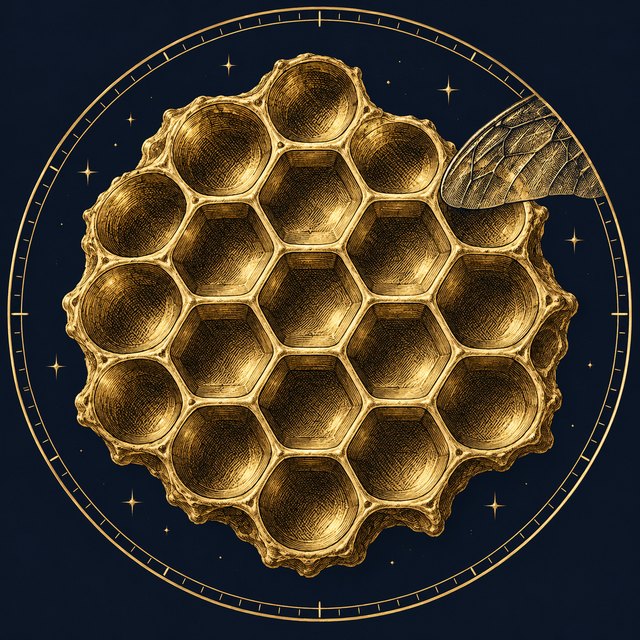 WaxRound cells, warmed until the walls flow flat.
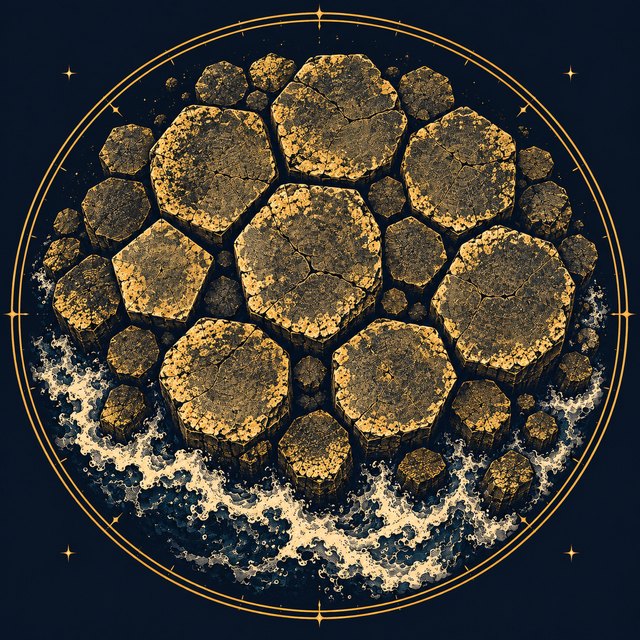 BasaltCracks that learned from each other on the way down.
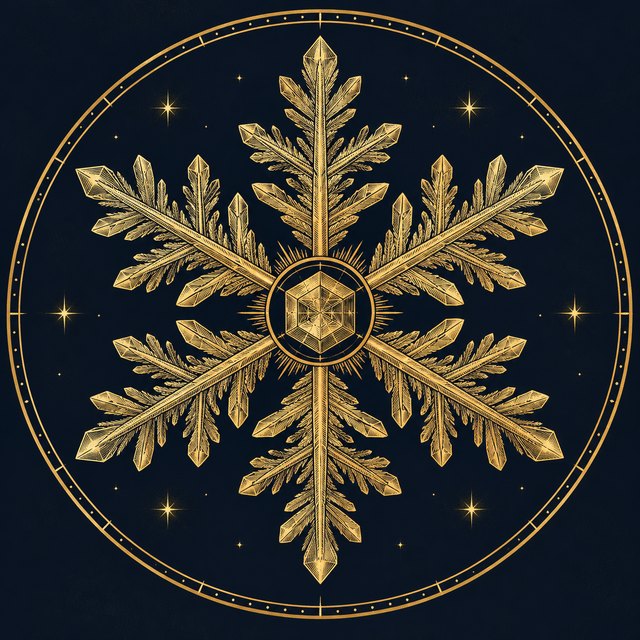 IceSix arms from six corners of one tiny crystal.
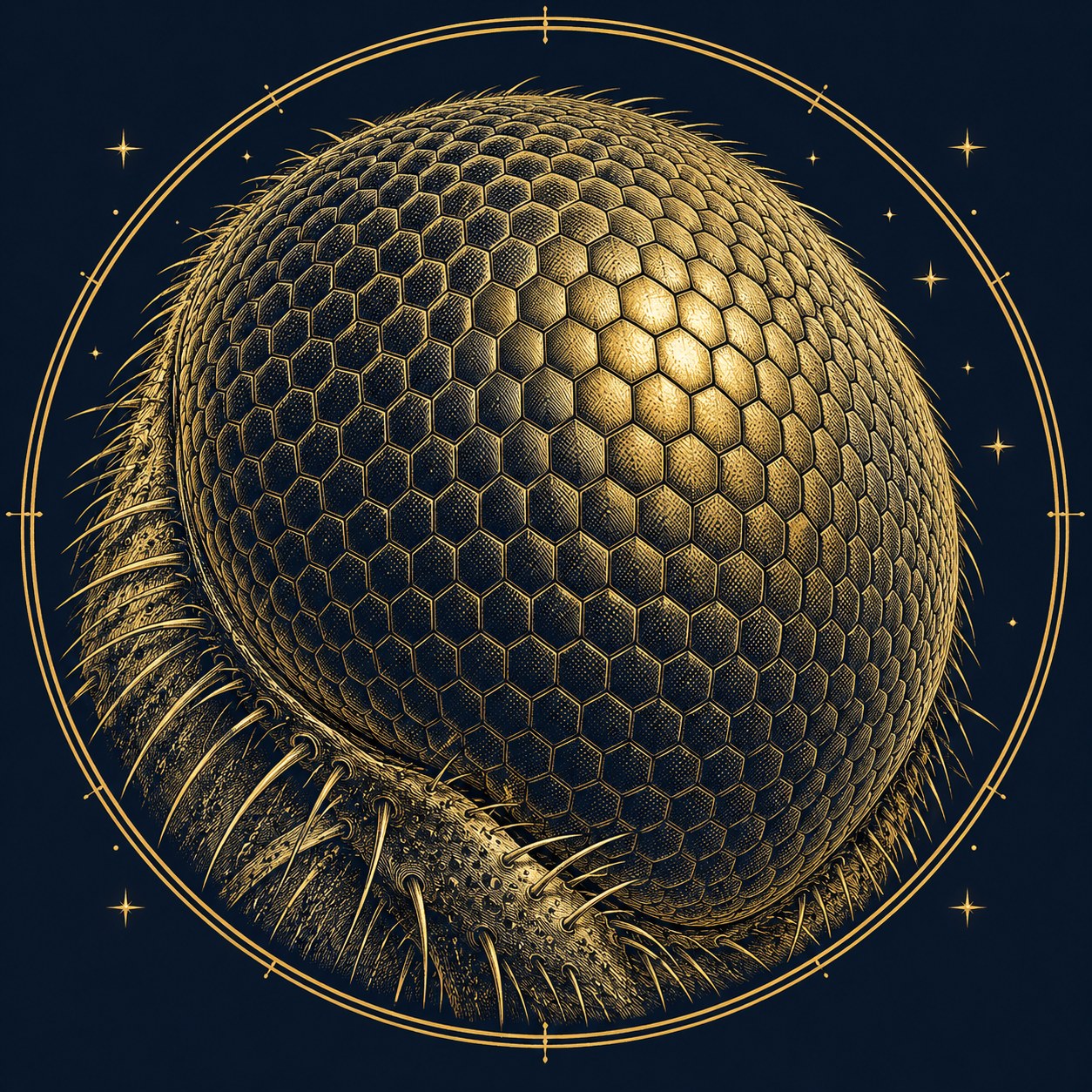
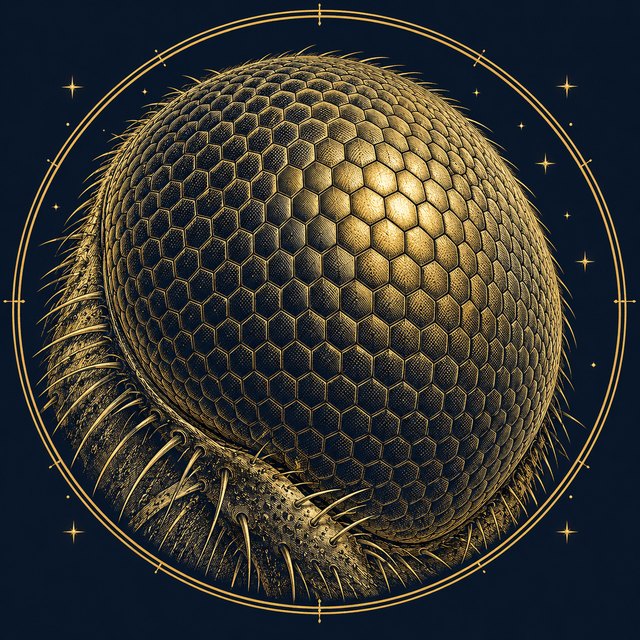 The fly's eyeThe most lenses that fit on a dome.
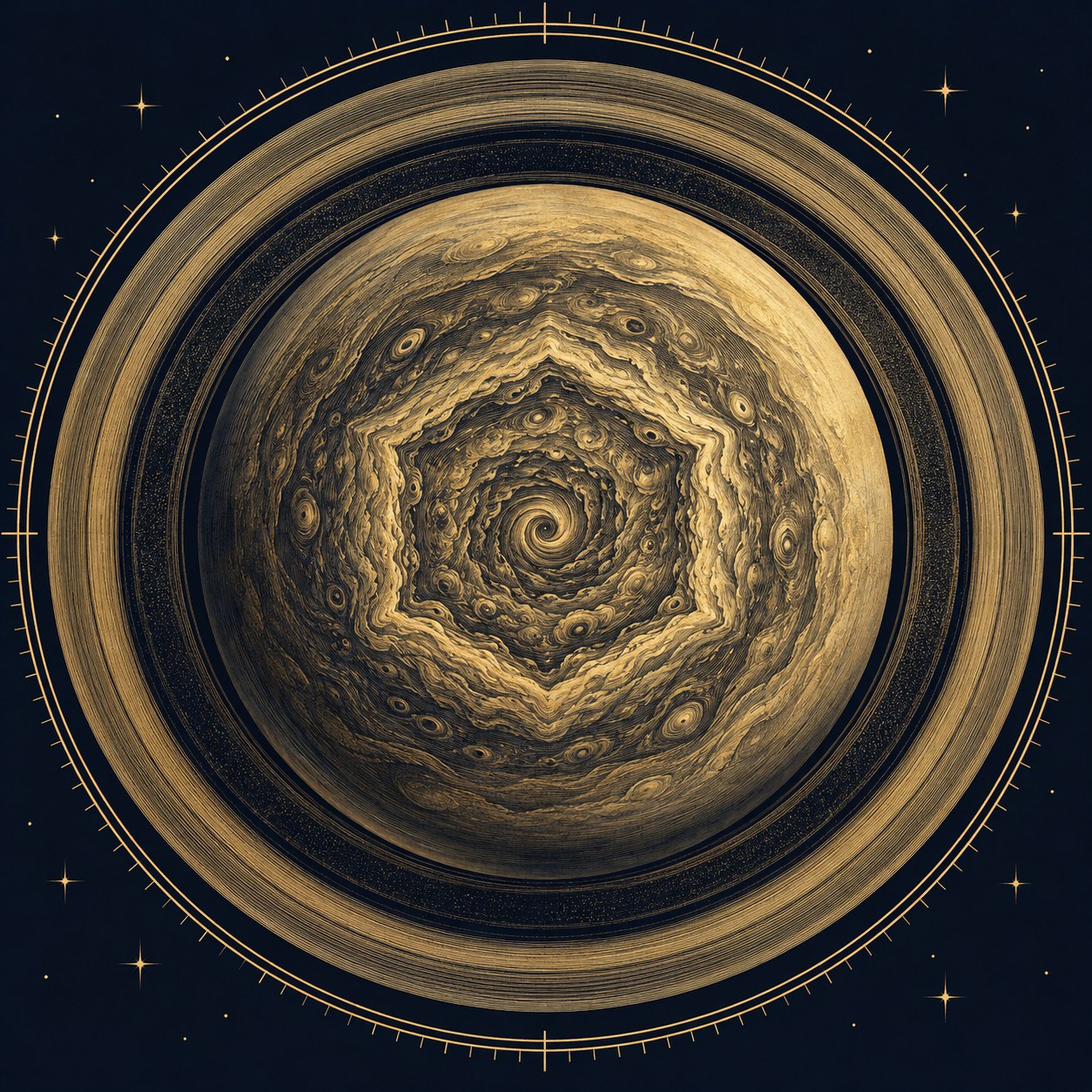
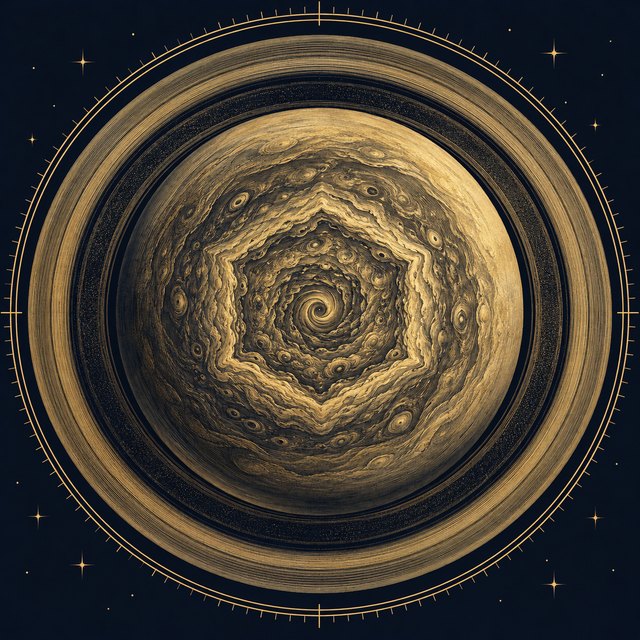 SaturnA wave with six crests running round a pole.
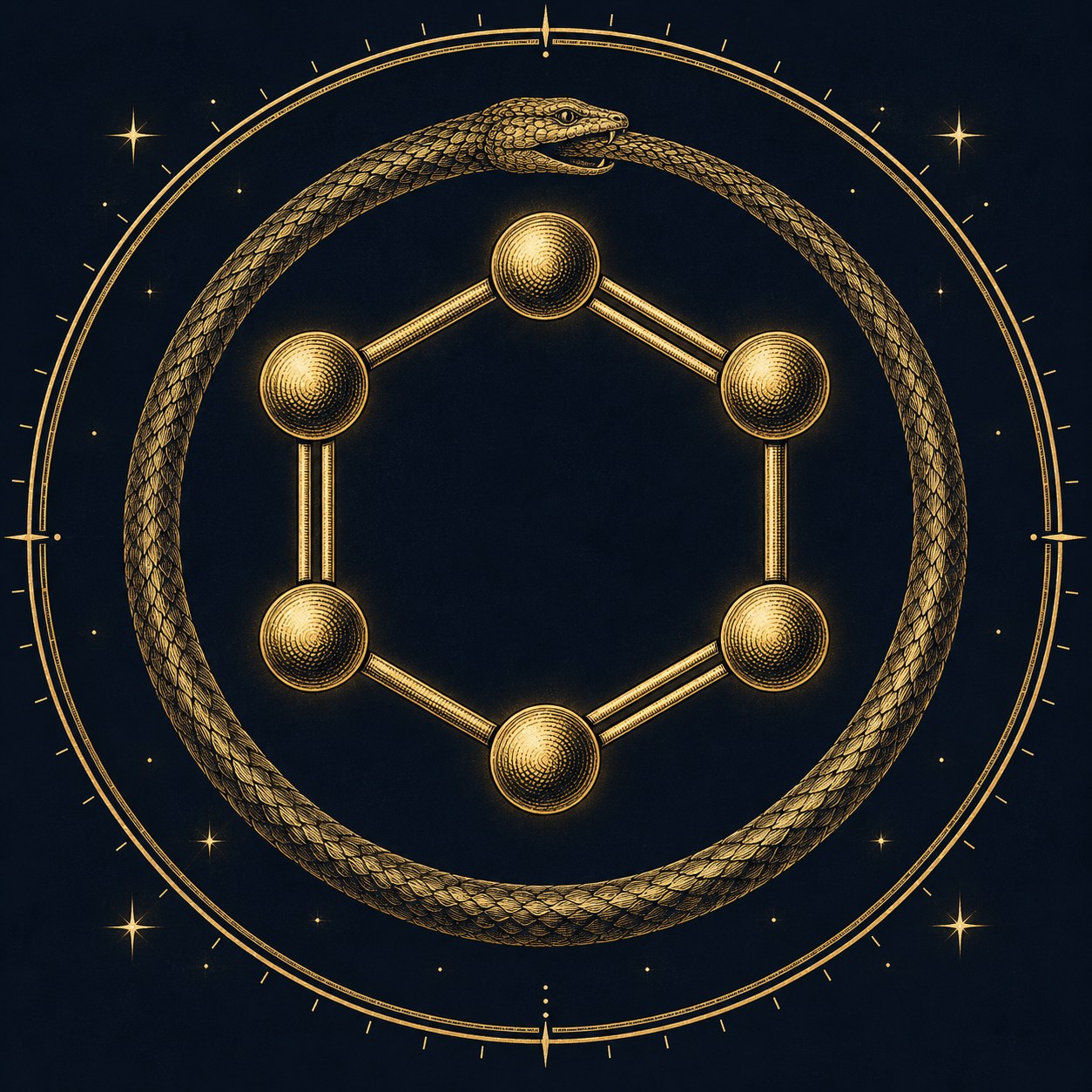
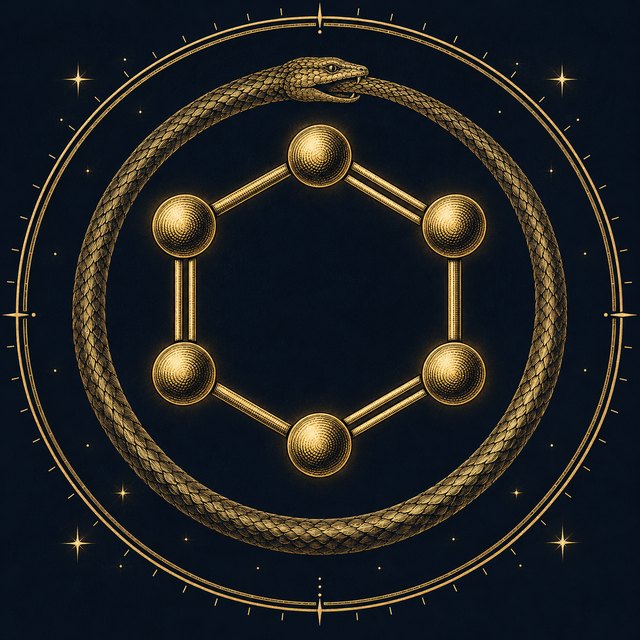 BenzeneSix carbons, the ring Kekule dreamed.
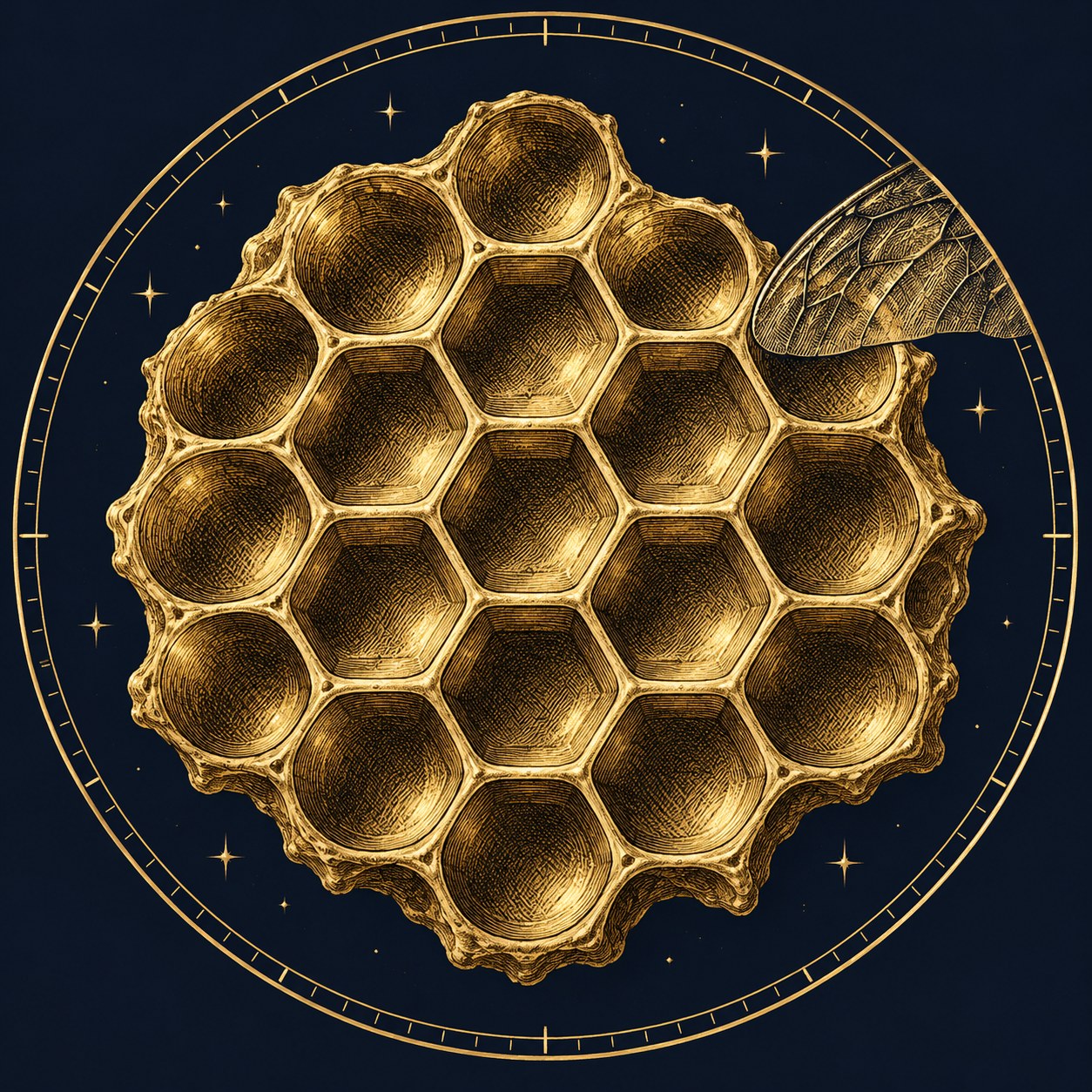

The honest part
Six is forced only when the cells are equal, the surface is flat and the walls have time to settle, and nature does not always provide all three. A real honeycomb has cells of five and seven sides where the comb bends or two bees' work meets. The Causeway has pentagons and heptagons among its forty thousand columns, and the ones nearest the top, where the cooling was fastest, are the most irregular. A soap foam in three dimensions is the test case that broke the rule: Lord Kelvin guessed in 1887 that the cheapest way to fill space with equal cells was a slightly curved fourteen-sided figure, and it stood for a century until Denis Weaire and Robert Phelan found a better one in 1994 with two kinds of cell, twelve-sided and fourteen-sided, in a pattern that was later built into the walls of the swimming hall for the Beijing Olympics. In the plane the hexagon wins and Hales proved it; in space the answer is uglier and nobody has proved anything yet. And Saturn's hexagon is a wave, not a foam, with six sides because of the speed of a wind and the size of a planet rather than because of any pressing. What survives all of that is the first thing: when equal things are pushed together on a flat surface and left to settle, they come out six-sided, and they do it in wax and stone and oil and ice and on a planet nine times wider than ours, without a plan.