
1957 to 2026, Princeton, Oxford, Chapel Hill and Santa Barbara
The multiverse
Hugh Everett, David Deutsch, Laura Mersini-Houghton and Hartmut Neven
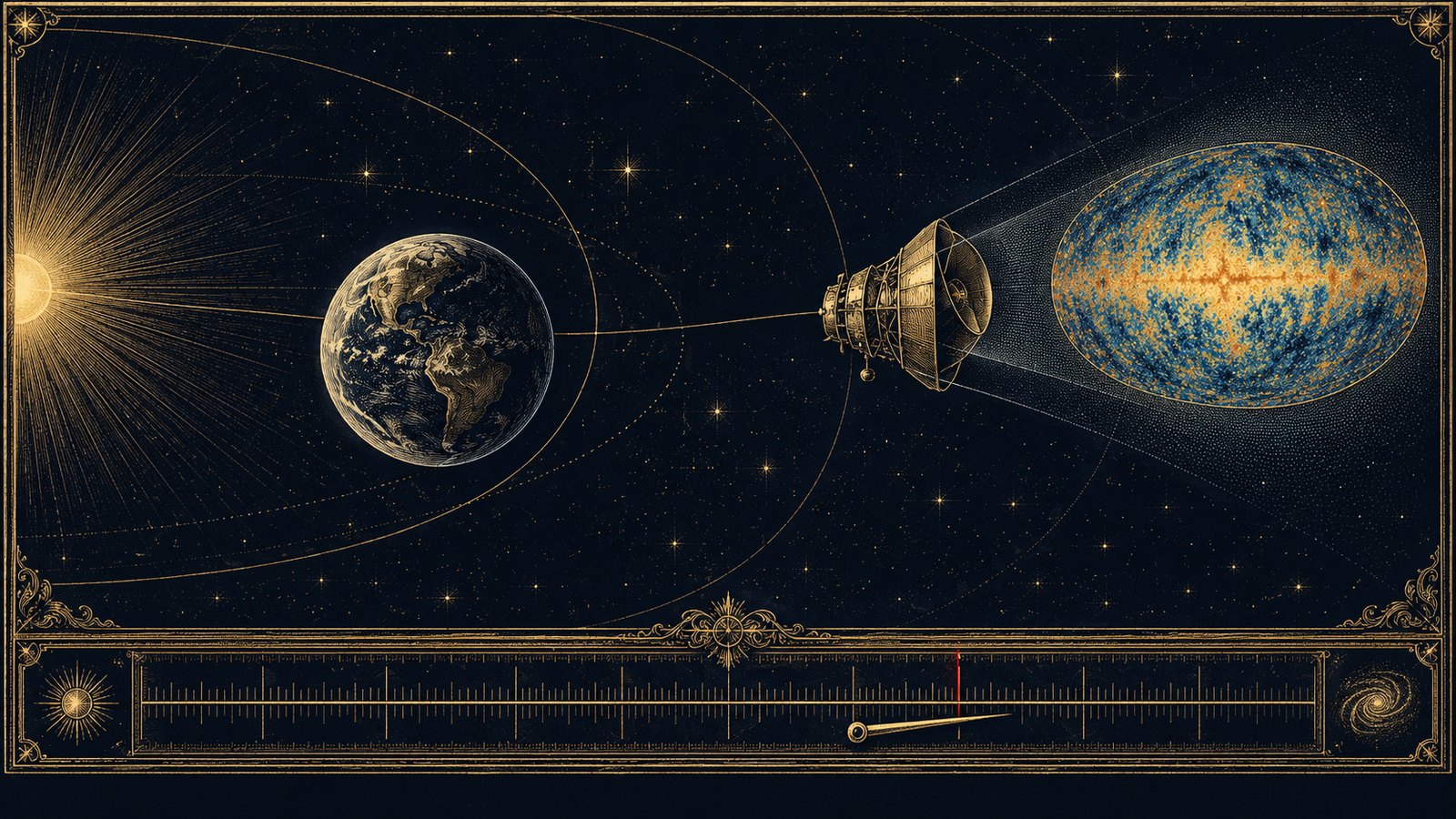
On December 9, 2024 the founder of Google's quantum lab announced a chip that did in five minutes what the fastest ordinary computer would need ten septillion years to do, and wrote that the result lends credence to the idea that the work was done in many parallel universes. Eleven years earlier a cosmologist at Chapel Hill had said the gravity of other universes was already visible in the oldest light in the sky, and that the Planck satellite had just confirmed it. This page is what each claim rests on, what the sky and the chip have actually shown, and an instrument for the three pictures: the tug of a neighbour on our sky, the branching of worlds, and the echo that makes the chip fast.
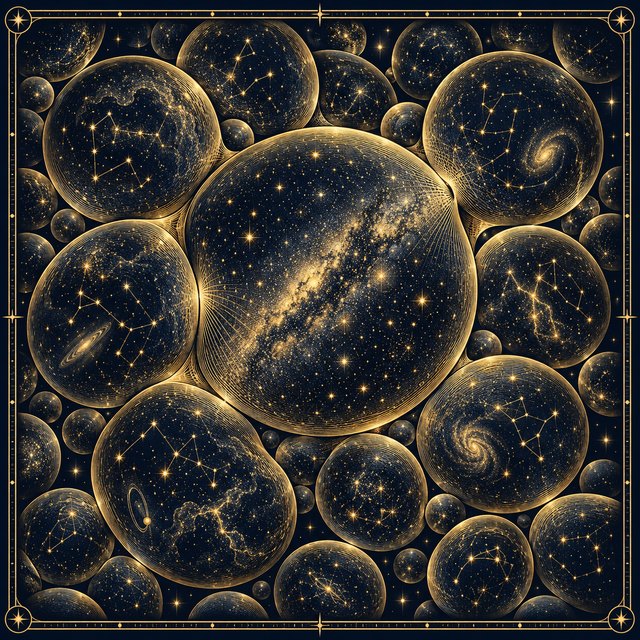
On December 9, 2024 the founder of Google's quantum computing lab, Hartmut Neven, published a short note introducing a new chip called Willow. It had 105 of the cold superconducting circuits called qubits, and on a standard test called random circuit sampling it had finished in under five minutes a task that, by his lab's estimate, would take one of the fastest ordinary computers in the world ten septillion years, a ten followed by twenty-five zeroes, longer than the universe has existed by a factor with fourteen zeroes in it. Then he wrote a sentence that no company executive had put in a press release before: the result lends credence to the notion that quantum computation occurs in many parallel universes, in line with the idea that we live in a multiverse, a prediction first made by David Deutsch. The sentence went round the world in a day. Most of the physicists who were asked about it said the chip was real and the sentence was a reading, and that the same chip is just as well explained without any other universe at all. That disagreement is the subject of this page, and it is older than the chip.
Where the word comes from
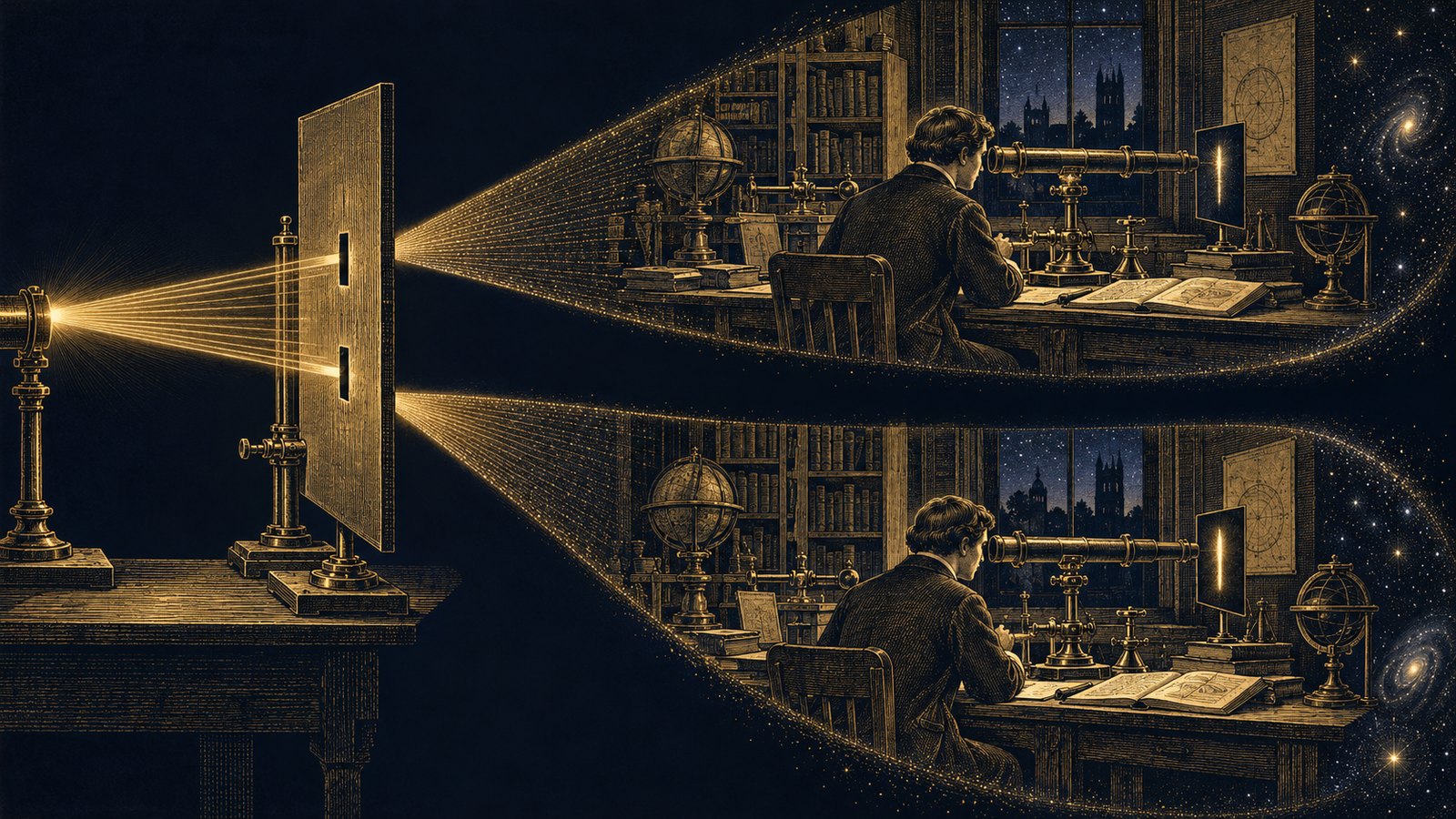
There are two different things called the multiverse, and the chip belongs to the first. In 1957 a Princeton graduate student named Hugh Everett, working under John Wheeler, proposed that the equation of quantum mechanics should simply be believed. The equation says that an electron sent at two slits goes through both, and that a measurement of which slit does not pick one but produces a state in which the apparatus has recorded the left slit and a state in which it has recorded the right, both there, both with their own observer who saw one answer. Everybody else had added a rule that one of them becomes real and the other vanishes. Everett removed the rule. Every outcome happens, the world branches at every measurement, and the branches no longer speak to one another. His paper was received politely and ignored; he left physics for defence work and died at fifty-one. Thirty years later an Oxford physicist named David Deutsch, who believed Everett entirely, asked what a computer would be able to do if it were built out of the branching rather than in spite of it, and in 1985 wrote down the universal quantum computer: a machine whose working parts are in many states at once, so that one run explores every path. In 1994 Peter Shor found the first thing such a machine could do that an ordinary one cannot, which is to break a large number into its prime factors in a reasonable time, and that is the result on which the whole industry and all the worry about codes is built.
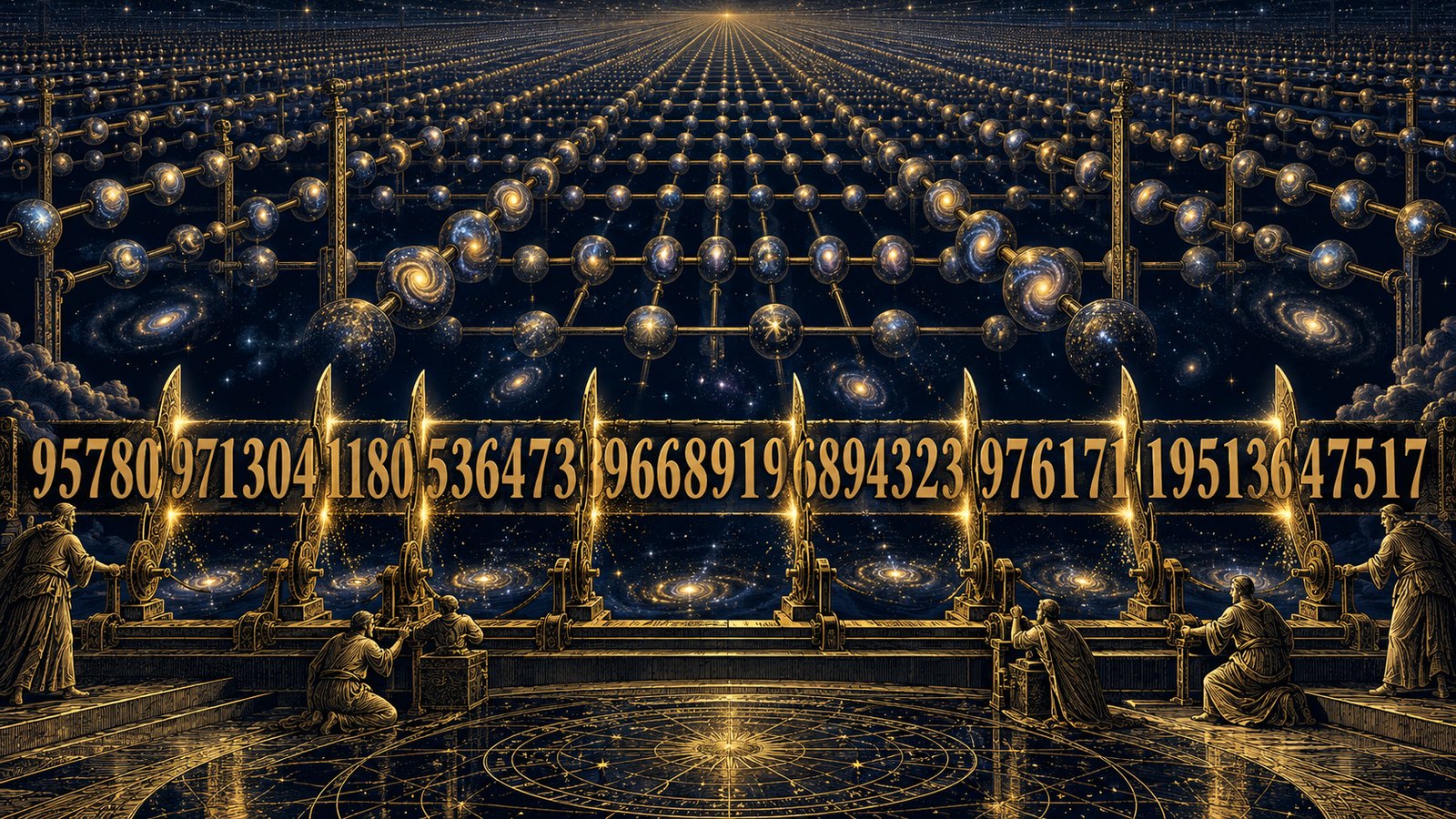
Deutsch's reading of it has never changed. In The Fabric of Reality in 1997 he put a challenge on page 217 to anyone who still believed there was one universe: explain how Shor's algorithm works. When it has factorised a number using something like ten to the five hundred times the computing resources that can be seen to exist, he asked, where was the number factorised? The visible universe has about ten to the eighty atoms. The chip in Neven's note is Deutsch's argument with a date on it. The reply, which is also unchanged, is that the quantum state of a machine is a single object described by a list of amplitudes, that those amplitudes add and cancel like waves, and that the speed comes from the cancelling, with nothing in the equations that needs the amplitudes to be places. Scott Aaronson, who has spent his career on what these machines can and cannot do, has written that the challenge is a fair one and that it has an answer, and that the answer does not require anyone to take a side on what the amplitudes are. Both readings predict every number the chip produces. That is why the chip cannot settle it, and why it sits on this shelf and not on the lineage.
The second multiverse is the one in the sky. In 1987 Steven Weinberg, who did not like the idea, used it anyway: if there were a great many universes with different values of the energy of empty space, and only those with a small value could make galaxies, then we should expect to find ourselves in one with a small but not zero value. Eleven years later the energy of empty space was measured and was small and not zero, which is the dial that may be turning. Then in 2000 Raphael Bousso and Joseph Polchinski counted the ways string theory could fold up its extra dimensions and found the number was enormous, and by 2003 Leonard Susskind had named the result the landscape and put the count at ten to the five hundred, each fold a different universe with different constants. Eternal inflation, from Andrei Linde and Alexander Vilenkin, supplied the engine that would keep making them. Max Tegmark sorted the whole business into four levels in Scientific American in May 2003, and the word stopped being science fiction. The pattern is the one on the dials page: a universe that looks arranged for us, and an explanation in which nothing was arranged, because everything was tried.
The woman who said we could see them
Laura Mersini was born and raised in Tirana under the dictatorship of Enver Hoxha. Her father, a mathematician and economist, was seen as ideologically opposed to the regime and exiled; she has said her parents found her interest early and fed it anyway. She came to the University of Maryland in the mid 1990s, took her doctorate at Milwaukee in 2000 under Leonard Parker, who had worked out how an expanding universe makes particles out of nothing, and joined the University of North Carolina at Chapel Hill in January 2004. By her own account the idea came in 2005 in the Starbucks on Franklin Street. Everyone else was treating the landscape as a lottery and asking which ticket we had drawn. She asked a different question: if the early universe was a quantum wave spread across the whole landscape, the way an electron's wave is spread across both slits, then which valleys would the wave settle in, and what would be left over from the settling?
With Richard Holman of Carnegie Mellon and Tomo Takahashi of Saga she wrote the answer out in two papers submitted in November and December 2006 and published in Physical Review D in 2008. The wave on the landscape loses its coherence, the way every quantum wave does when it touches something large, and the losing is not symmetric: the high-energy valleys survive it and the low-energy ones do not, so a universe like ours, which began hot and violent, is the likely kind rather than the unlikely one. And the settling leaves a mark. Our patch of the universe was entangled with the others before it separated from them, and the entanglement, she argued, modifies the equation that governs the expansion by a small amount at the largest scales. The papers list what that amount would do: suppress the clumping of matter on the largest scales, which at the time reconciled two surveys that disagreed; suppress the oldest light's pattern at the widest angles; leave the possibility of a great void; and sharpen structure at small scales. In a third paper, submitted in October 2008, she and Holman added the one that made the news: the pull of what lies beyond the horizon would tilt our whole patch, giving every galaxy cluster a slow common drift of its own, a preferred direction in the sky, and a small extra dipole in the oldest light, of order three millionths of a degree.
The sky, for a while, seemed to be answering. In 2007 Lawrence Rudnick at Minnesota, looking at a radio survey for other reasons, found a dip in the number of radio sources exactly where the WMAP satellite had seen an unusually cold patch in the oldest light, in Eridanus, and worked out that to make the cold spot that way would need an empty region some 140 megaparsecs in radius, far larger than the standard model expects. In 2008 Alexander Kashlinsky at Goddard measured the motion of hundreds of galaxy clusters against the oldest light and reported a coherent flow of hundreds of kilometres a second out to at least four hundred megaparsecs, in one direction, that he could not explain with the matter inside the horizon and called the dark flow; her October paper cites his figure of about 700 kilometres a second as being in good agreement with the induced dipole she had predicted. When the Planck satellite published its first full map of the oldest light in March 2013, the strange features WMAP had found were all still there: more power in one half of the sky than the other, a deficit of power at the widest angles, two of the largest patterns aligned with each other, and the cold spot, each at about three standard deviations. She told Physics Today that May that the map clearly supported her hypothesis, and that she read the imbalance and the cold spot as the gravity of universes outside ours.
What the sky actually said
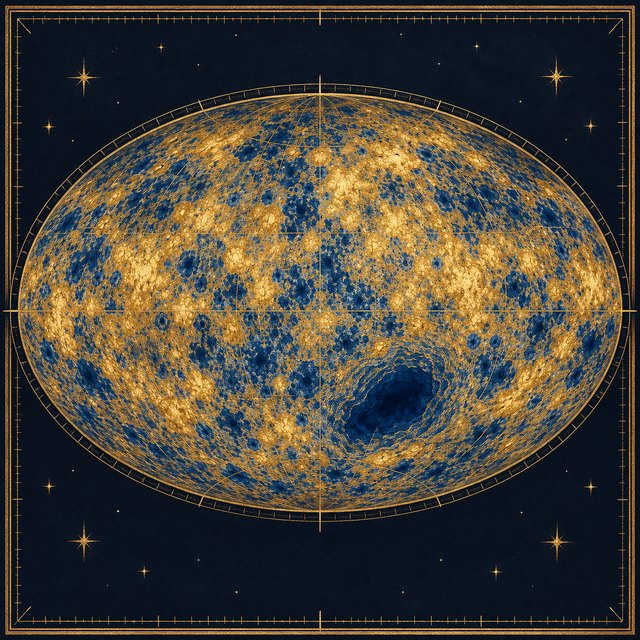
The same Planck release contained a second paper, on the motions of clusters, and it did not find the flow. A blind search of its whole cluster sample put an upper limit on any common drift of 254 kilometres a second at 95 percent confidence, a third of the figure her paper had matched, and concluded that the universe is homogeneous on the largest scales it could test. David Spergel, who had led the WMAP analysis, told New Scientist that the Planck paper appeared to rule out the claims of Kashlinsky and his collaborators, and a Planck scientist added that if there is no dark flow there is no need for an exotic explanation of it. Peter Woit, who keeps a long public ledger of the field's claims, noted on May 22 that the one specific number tying another universe to a measurement had just been measured and had not been there, that Planck had not examined the multiverse claims at all, and that no new paper of hers analysed the Planck data. The cold spot has had a longer run. In 2015 Istvan Szapudi's team found a real underdensity in front of it, some three hundred megaparsecs in radius, centred at a redshift of about 0.22, with a matter deficit of about 14 percent, and called it a plausible cause. In 2017 a Durham group went back with a redshift survey of the region, found that the voids there are too shallow to make a spot that cold by the only known mechanism, found a control field with the same thin foreground and no cold spot at all, and suggested the spot is primordial, something stamped on the light at the start rather than cast on it since. Which is what she had said, and is also what a hundred other explanations say.
So the ledger reads like this. The features are real, at the level of three standard deviations, which in this field is the level at which things are interesting and not yet the level at which they are believed. Her 2006 papers did say that the widest angles should be quiet and that a void was possible before the Planck map and before Rudnick's dip, and that counts. The one prediction that named a number, the flow, was not confirmed. The clumping she said was suppressed is still argued about under another name. And the reading that the features are the gravity of other universes is one reading of an anomaly that has several, most of them inside this universe. Her 2022 book, which told the story from Tirana to Chapel Hill, got a review in Publishers Weekly that found the personal story stirring and the science often imprecise or unclear. That is roughly where the field has left it: the work is published in the real journals, the sky has not said no, and it has not said yes.
The chip
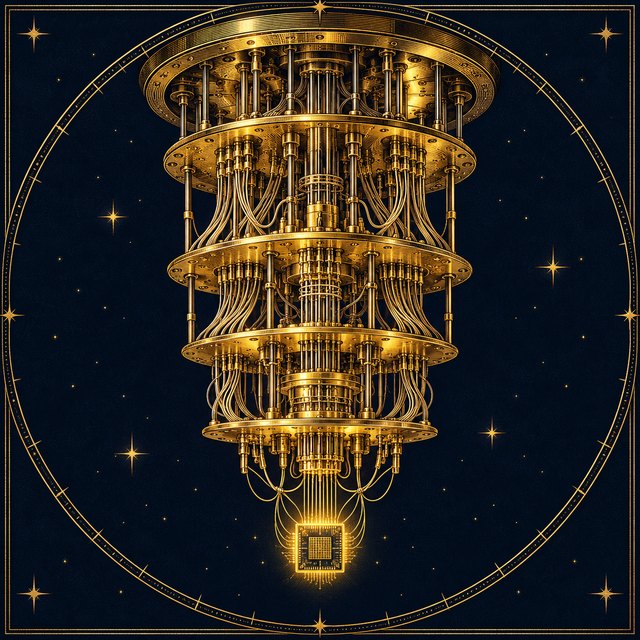
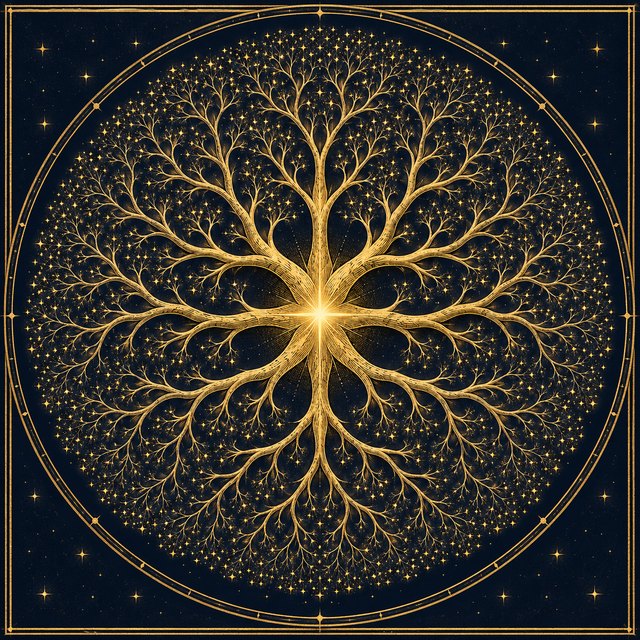
Willow has kept producing. In December 2024 the same lab showed in Nature that making its logical qubit bigger, from a three by three patch to five by five to seven by seven, cut the error rate in half each time, which was the first time anyone had crossed the threshold at which error correction gains rather than loses. On October 22, 2025 it published the Quantum Echoes result: a calculation of a kind that can be checked, run on the chip in about two hours, that the Frontier supercomputer was estimated to need over three years for, a factor of thirteen thousand. The method sends a signal into the machine, nudges one qubit, runs the whole evolution backward, and listens for an echo, which comes back loud only because the many paths through the machine add up in step. On October 15, 2026 it published in Science a way of growing the special states that a fault-tolerant machine will need by the million, cutting the error in them forty times to one part in ten thousand, at the cost of throwing away about ninety-two percent of the attempts. None of these papers mentions another universe. The December 2024 note did, once, and the sentence is Deutsch's.
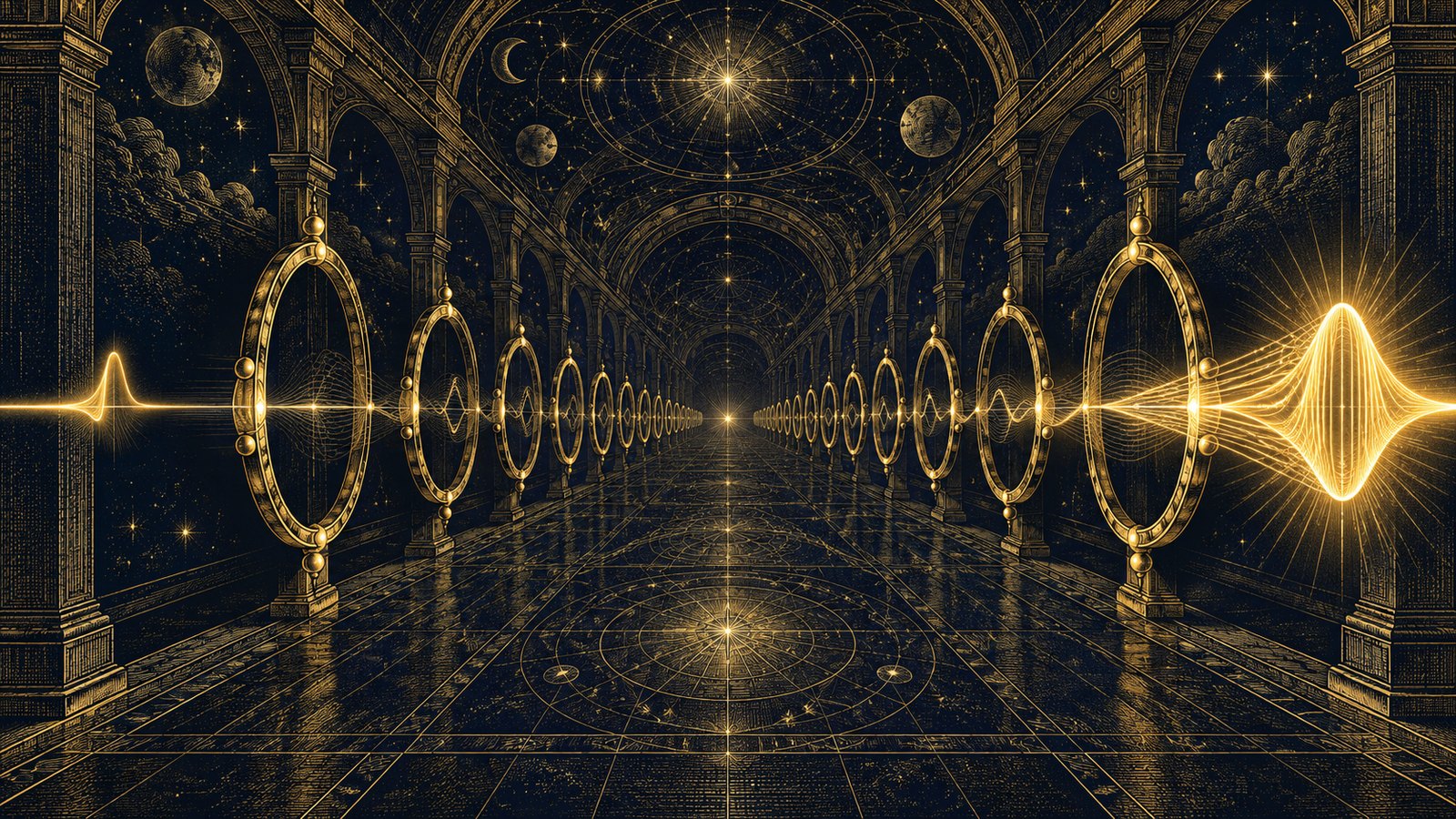
Here is the honest shape of it. The echo is interference: paths that add in step and paths that cancel. In Everett's reading the paths are worlds and the echo is their agreement. In the single-world reading the paths are terms in one wave and the echo is arithmetic. The chip does not care, and the numbers it returns are the same under either. The multiverse of the sky is a different claim, about places rather than branches, and it is the only one of the two that has ever proposed a measurement. The measurement was made, and the answer was no for the flow and not yet for the rest. Leibniz imagined God surveying every possible world and choosing the best; the landscape is his picture with the choosing taken out, and Mersini-Houghton's version puts a little of it back, since the wave does the choosing and prefers the hot ones. Whether that is physics or a very good story is open, and the instrument below lets you try all three pictures with your own hands.
The instrument
The disc has three faces, each drawn on one of the plates above. The tug is the sky of the oldest light with a dial for the pull of a neighbour beyond the horizon: turn it and one half of the sky quietens, a cold spot deepens, and every cluster begins to drift one way, with the drift read against Planck's ceiling. The branching is Everett's tree: each tap is a measurement, each measurement splits every world, and the count runs up toward what a chip of 105 qubits holds at once. The echo is the arithmetic of the chip: a ring of arrows that add to something large when they are in step and to almost nothing when they are scrambled, with a dial that scrambles them.
The honest part
The tug draws her prediction as she described it, a slow tilt of everything inside the horizon toward what lies outside, and the ceiling on the dial is Planck's limit of 254 kilometres a second, which the tilt she matched exceeds. The cold spot in the tug is placed where the real one is, in Eridanus, but its depth on the dial is illustrative, since nobody has published how deep a neighbour's gravity would make it. The branching counts worlds the way Everett's reading counts them and says nothing about whether they are there; the number it reaches for 105 qubits, about four followed by thirty-one zeroes, is a count of amplitudes, and a reader who prefers the single-world reading may call it that. The echo is a toy of the real method, which uses many more arrows and a controlled scramble, but the rule it shows, that a sum of arrows in step grows with their number and a sum of scrambled arrows only with its square root, is the whole reason a quantum machine is fast and is not in dispute.
What is in dispute is everything else on the page, and that is unusual for this shelf. Most open questions here are open because nobody has found the instrument that could close them. This one has two instruments, one in orbit and one in a refrigerator in Santa Barbara, both of them working, both of them returning numbers that two readings explain equally well. The chip will get bigger and the sky will get mapped again, and the multiverse will not get any closer or further away, because the thing that separates the readings is not a measurement but a decision about what the arithmetic is a picture of. The Greeks had a word for an order that holds whether or not you can see all of it. If there are others, the order is wider than we thought and we are a small part of it, which is what this site has been saying since Pythagoras. If there is only the one, then the amplitudes are the strangest thing in it, and the universe computes with resources it does not appear to have. Either answer keeps the question open, and this is one of the few pages here where the author of the chip and the author of the prediction would both tell you the same thing: look again.