
1623 to 1980, Florence, Princeton, Cambridge and Murray Hill
Why does mathematics work?
Galileo, Eugene Wigner, G. H. Hardy, Richard Hamming and Paul Dirac
A man in Paris in 1846 did a long sum about the wobble in Uranus, wrote down a position in the sky, and a planet was there. The same thing has happened with a particle, a glow across the whole sky, a bending of starlight and a ripple in space, each of them written on paper first, some of them a century early. In 1960 a physicist asked why marks on paper should know about the world at all and said he had no answer. This page is the list of things the sums found before the eyes did, the ones the eyes are still looking for, and the ones the sums got wrong.
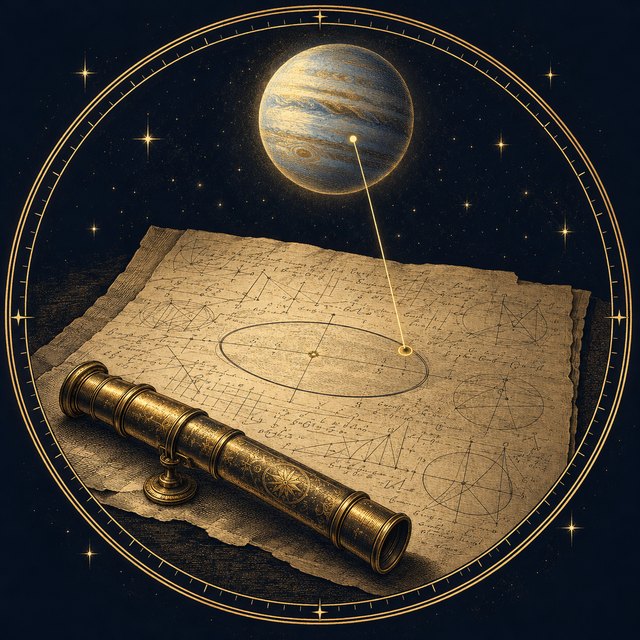
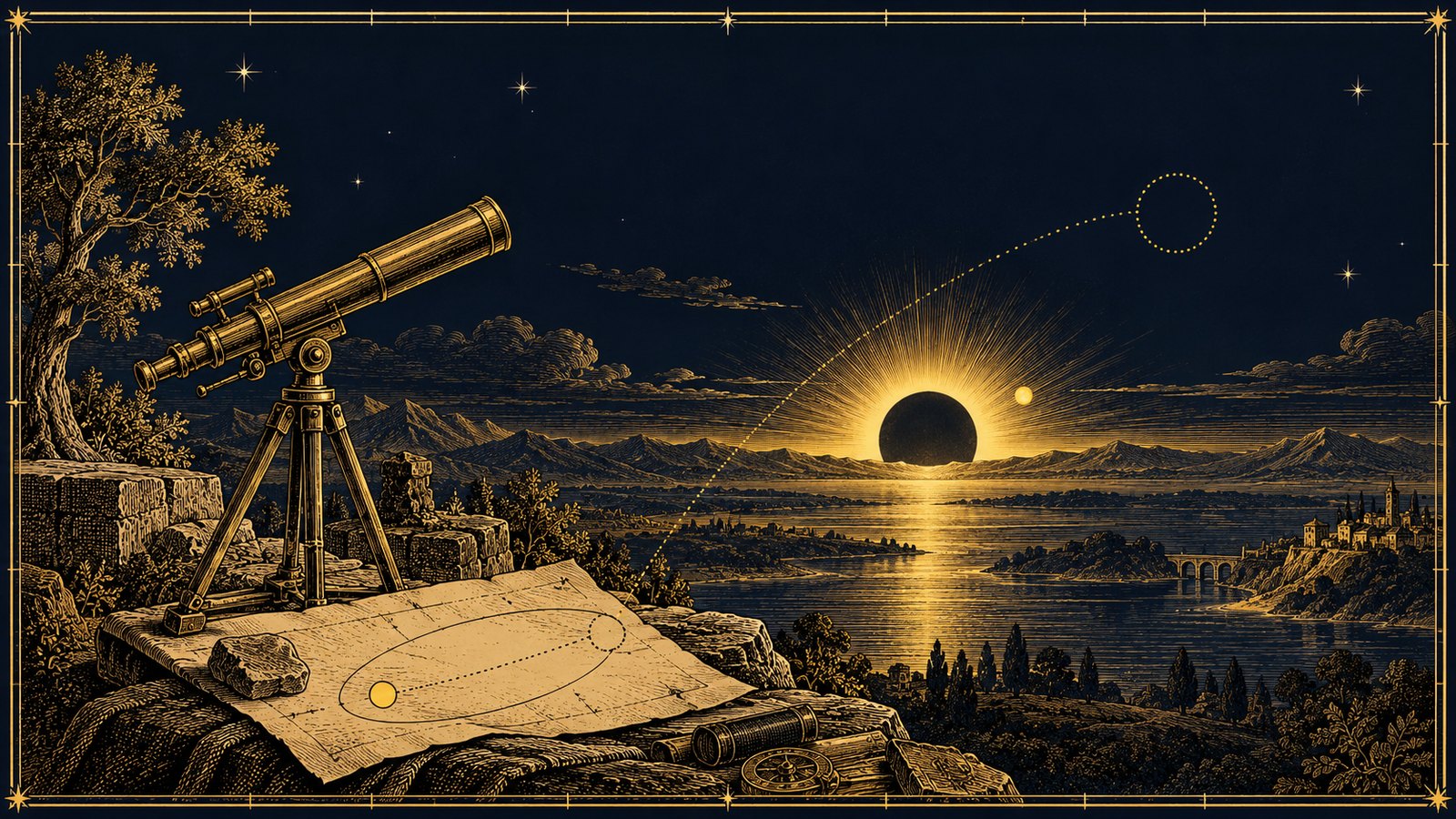
On September 23, 1846, a letter from Paris reached the Berlin Observatory. It was from Urbain Le Verrier, a mathematician who had never looked through a serious telescope, and it said that a planet nobody had seen would be found that night about five degrees east of the star Delta Capricorni. Uranus had been drifting from where Newton's laws put it, and Le Verrier had spent a year working out where an unseen mass would have to be to pull it off course. Johann Galle got the letter in the afternoon, opened the dome at dark, and had the planet before midnight, within one degree of the stated place. Nothing about the sum had touched the sky. It was ink on paper, and the sky agreed with it. Neptune is the clean case, and it has happened again and again since: the positron, a particle Dirac's equation insisted on before any cloud chamber had seen one; the glow at the edge of the universe, calculated in 1948 and heard as a hiss in a horn antenna in 1965; the Higgs, written down in 1964 and found in 2012; gravitational waves, found in the equations in 1916 and in two black holes in 2015. The instrument below is the list, with the years each one waited.
Wigner's question
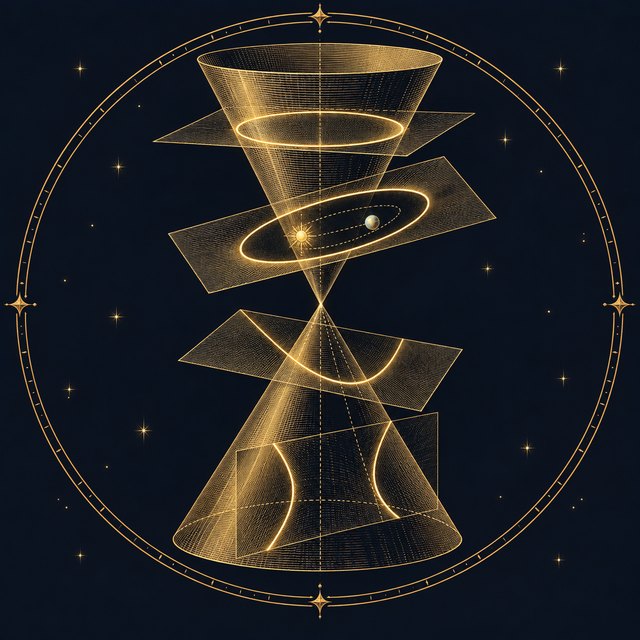
In 1959 the physicist Eugene Wigner gave a lecture at New York University with a title that has never been improved on: the unreasonable effectiveness of mathematics in the natural sciences. His point was not that mathematics is useful. It was that there is no reason it should be. Mathematicians make up their objects for their own reasons, often for beauty, and then, decades or centuries later, a physicist finds that the thing made up for its beauty is exactly what the world is doing. The complex numbers were a trick for solving cubic equations in the sixteenth century and turned out to be the bones of quantum mechanics. Riemann, in an 1854 lecture on the geometry of curved spaces, built the mathematics Einstein would need for gravity sixty years before Einstein needed it, with no planets in mind. The conic sections were cut from a cone by Apollonius around 200 BC as an exercise, and in 1609 Kepler found that the planets ran on one of them. Wigner called it a gift we neither understand nor deserve, and said that it was a miracle in the plain sense of the word: a thing that happens and that nobody can account for.
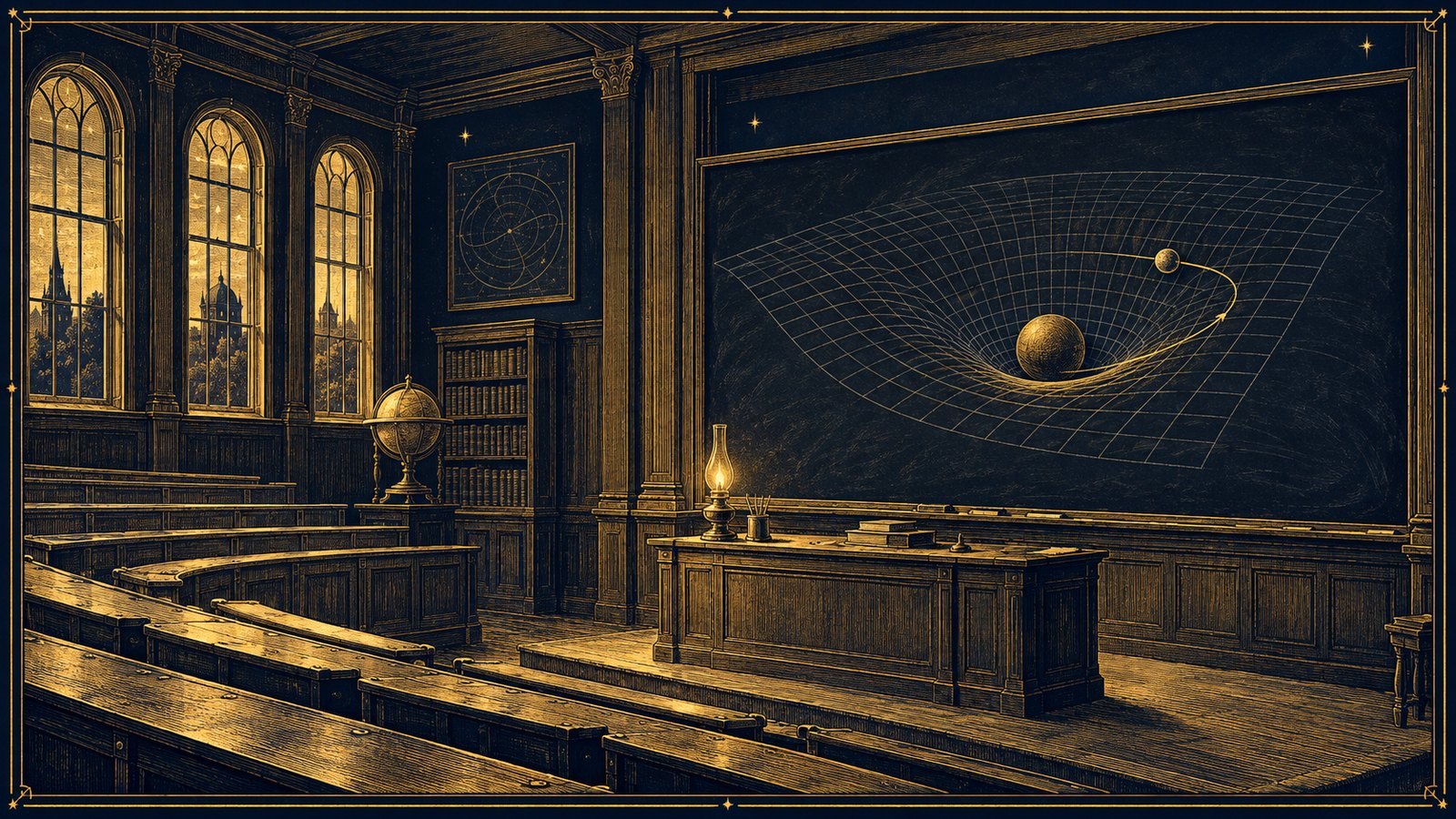
Galileo had said, in 1623, that the book of nature is written in the language of mathematics, and nearly everyone who has done physics since has believed him in their bones. The question is why that should be, and there are two kinds of answer. One says the world is mathematical, and the marks on paper work because they are a copy of the structure the world already has; in its strongest form, from the cosmologist Max Tegmark, the world simply is a mathematical object and we are patterns inside it. The other says the mathematics is ours. Richard Hamming, who designed the error-correcting codes that run inside every computer, answered Wigner in 1980 with four partial reasons: we see what we look for, so a mind that thinks in numbers finds numbers; we choose the mathematics that fits and quietly drop what does not; science answers only a narrow kind of question, the kind that has a number in it; and a brain that evolved to find patterns would find them whether or not they were there. He thought the four together were not enough, and said so.
Hardy's useless numbers
The sharpest version of the gift is when the mathematics was built to be useless. G. H. Hardy, the Cambridge number theorist, wrote a book in 1940 defending pure mathematics on exactly that ground: that the theory of numbers had never been and never would be of the slightest use to anyone, and was the cleaner for it. Thirty-seven years later three men at MIT built a cipher out of the difficulty of factoring large numbers, which is the theory of numbers, and it now guards every bank transfer and most of the messages in the world. Hardy's useless subject had been waiting. Dirac, who found the positron in his equation before Anderson found it in the chamber, drew the lesson in its most extreme form: that it is more important for an equation to be beautiful than to fit the experiment, because an ugly equation that fits is probably a coincidence and a beautiful one that does not probably has a small mistake in it somewhere. He meant it, and he was right more often than seems decent.
The instrument
Three lists. Seen: twenty-three things worked out on paper before anyone saw them, as bars of the years between the sum and the sighting, from Galle's single evening to the century that gravitational waves took. Still waiting: six things the sums say should exist and nobody has found, with the bar running to this year. Got it wrong: six things that were calculated in detail, believed for decades, and were not there, including a planet and the solids Kepler built this site's oldest shelf on. Hover a bar for the story.
The honest part
The third list is the honest part, and it is the one the famous essay leaves out. Le Verrier, who found Neptune by arithmetic, did the same arithmetic for Mercury and predicted a planet called Vulcan that was reported by astronomers for half a century and does not exist. The ether had its density and stiffness calculated. Kelvin told the geologists the Earth was a hundred million years old at most, from the physics of cooling rock, and he was wrong by a factor of fifty because of a thing he did not know about. Kepler fitted the five solids to the planets within a few percent and it meant nothing. The sums that worked are remembered and the sums that failed are not, and a list of only the successes is a list that would make anything look unreasonable. The right count is the successes against the attempts, and nobody has that count, because the failures were not kept.
Two more things. The effectiveness is mostly in physics. In biology, as the mathematician Israel Gelfand said, the mathematics is unreasonably ineffective: there is no equation for a cell, and the closer a science gets to living things and to people the fewer of its questions have a number for an answer. And the gift is narrower than it looks even in physics. What works is a small set of ideas, continuity, symmetry, the calculus, the geometry of curved spaces, used over and over, and the mathematicians have built a great deal else that has never touched the world and may never. Whether that means the world is made of mathematics, or that we only keep the part of mathematics the world happens to answer, is a question this site asks on every page and cannot settle on this one. What is not in dispute is the letter to Berlin. The sum was done first, and the planet was there.